Sections

sections button arrow
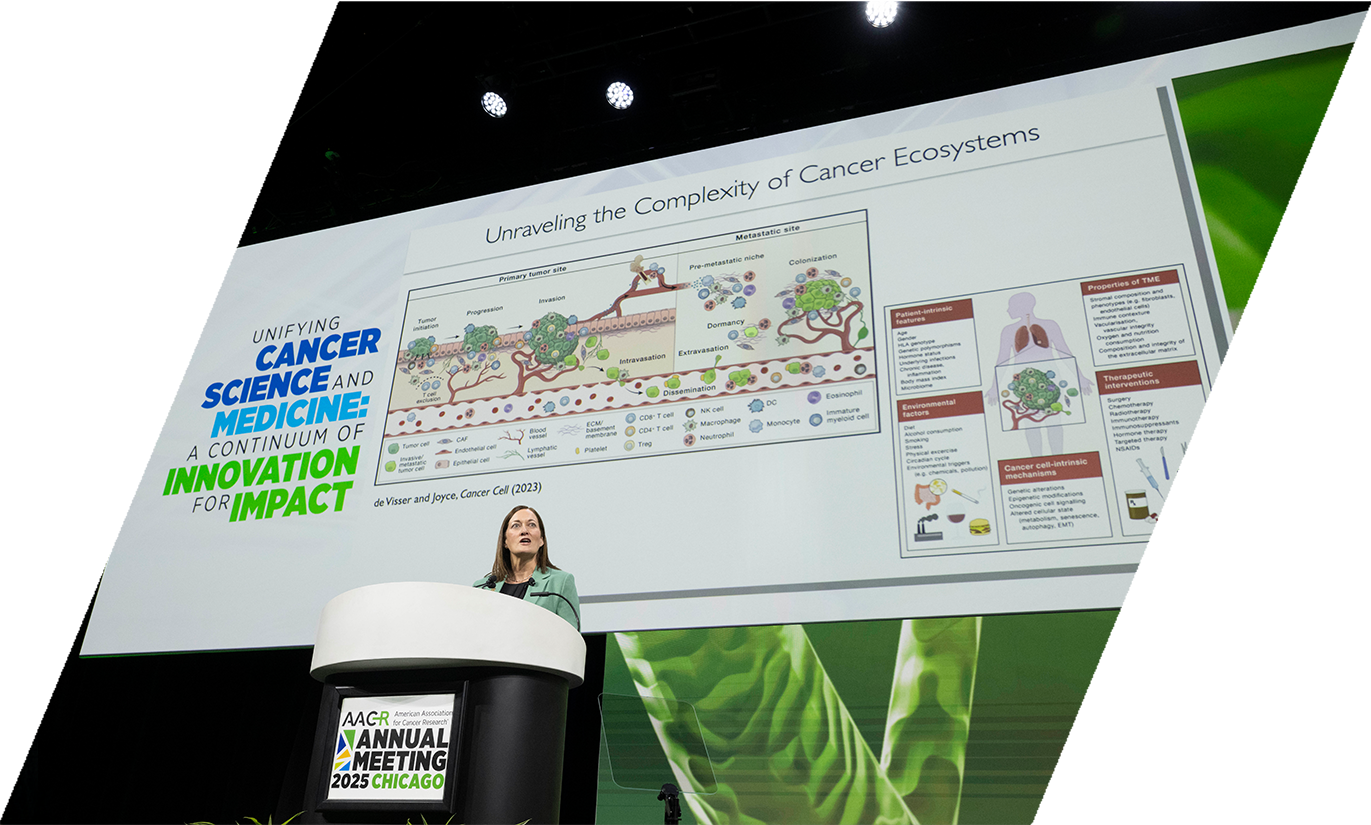
Johanna A. Joyce discusses Unraveling the complexity of cancer ecosystems during the Opening Plenary Session at the AACR Annual Meeting 2025.

AACR Annual Meeting 2025

tooltip iconAACR Fellow Johanna A. Joyce, PhD, FAACR, discusses “Unraveling the complexity of cancer ecosystems” during the Opening Plenary Session at the AACR Annual Meeting 2025.

Unifying Cancer Science and Medicine: A Continuum of Innovation for Impact

From paradigm-shifting basic discoveries to high-impact clinical trials, from population sciences to patient advocacy, the AACR Annual Meeting is the touchstone event for thought leaders across the cancer research community. Under the leadership of Program Chairs Lillian L. Siu, MD, FAACR, and Matthew G. Vander Heiden, MD, PhD, the AACR Annual Meeting 2025 convened more than 22,000 attendees from 85 countries in Chicago and online in April to explore and expand the continuum of cancer science and medicine.

AACR Annual Meeting 2025 Program Chairs Lillian L. Siu and Matthew G. Vander Heiden

HIGH-IMPACT CLINICAL TRIALS

Under the leadership of the AACR Annual Meeting Clinical Trials Committee—led by Cochairs Ryan B. Corcoran, MD, PhD, and Jayesh Desai, MBBS—the AACR Annual Meeting showcased the latest advances in cancer care and treatment. More than 200 clinical trials—including 15 phase III studies—were presented during the meeting, 38 of which were presented in oral Plenary Sessions and Minisymposia.
The Clinical Trial Plenary Sessions highlighted a wide range of treatment options, including novel approaches in precision oncology and advances in immunotherapy. An additional Plenary Session featured the latest advances in the treatment of non-small cell lung cancer.

These clinical trial presentations outlined critical advances in cancer care across a range of treatment options and cancer types:

  • KEYNOTE-689 Trial: Adding Perioperative Pembrolizumab to Standard of Care Improves Outcomes in Patients With Newly Diagnosed Head and Neck Cancer. The standard of care for patients diagnosed with locally advanced head and neck squamous cell carcinoma (HNSCC)—surgery to remove the tumor, followed by radiation with chemotherapy to eliminate any remaining cancer cells—has not changed in more than 20 years, and outcomes for many patients who receive this treatment protocol have been unsatisfactory.
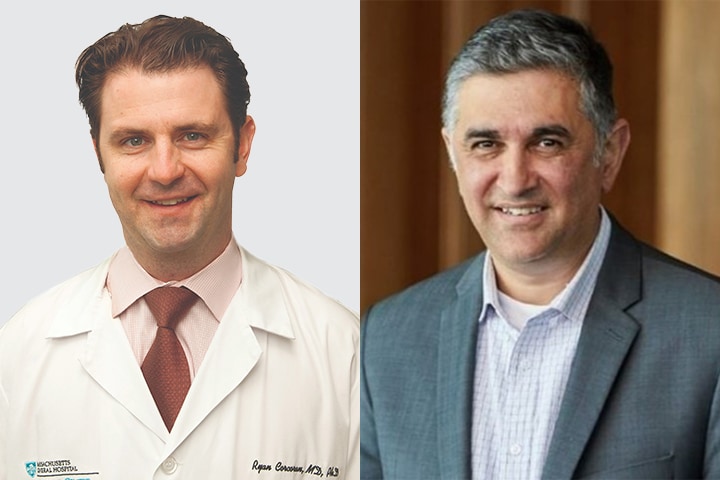
AACR Annual Meeting 2025 Clinical Trials Committee Cochairs Ryan B. Corcoran and Jayesh Desai

The Clinical Trial Plenary Sessions highlighted a wide range of treatment options, including novel approaches in precision oncology and advances in immunotherapy. An additional Plenary Session featured the latest advances in the treatment of non-small cell lung cancer.

These clinical trial presentations outlined critical advances in cancer care across a range of treatment options and cancer types:

  • KEYNOTE-689 Trial: Adding Perioperative Pembrolizumab to Standard of Care Improves Outcomes in Patients With Newly Diagnosed Head and Neck Cancer. The standard of care for patients diagnosed with locally advanced head and neck squamous cell carcinoma (HNSCC)—surgery to remove the tumor, followed by radiation with chemotherapy to eliminate any remaining cancer cells—has not changed in more than 20 years, and outcomes for many patients who receive this treatment protocol have been unsatisfactory.
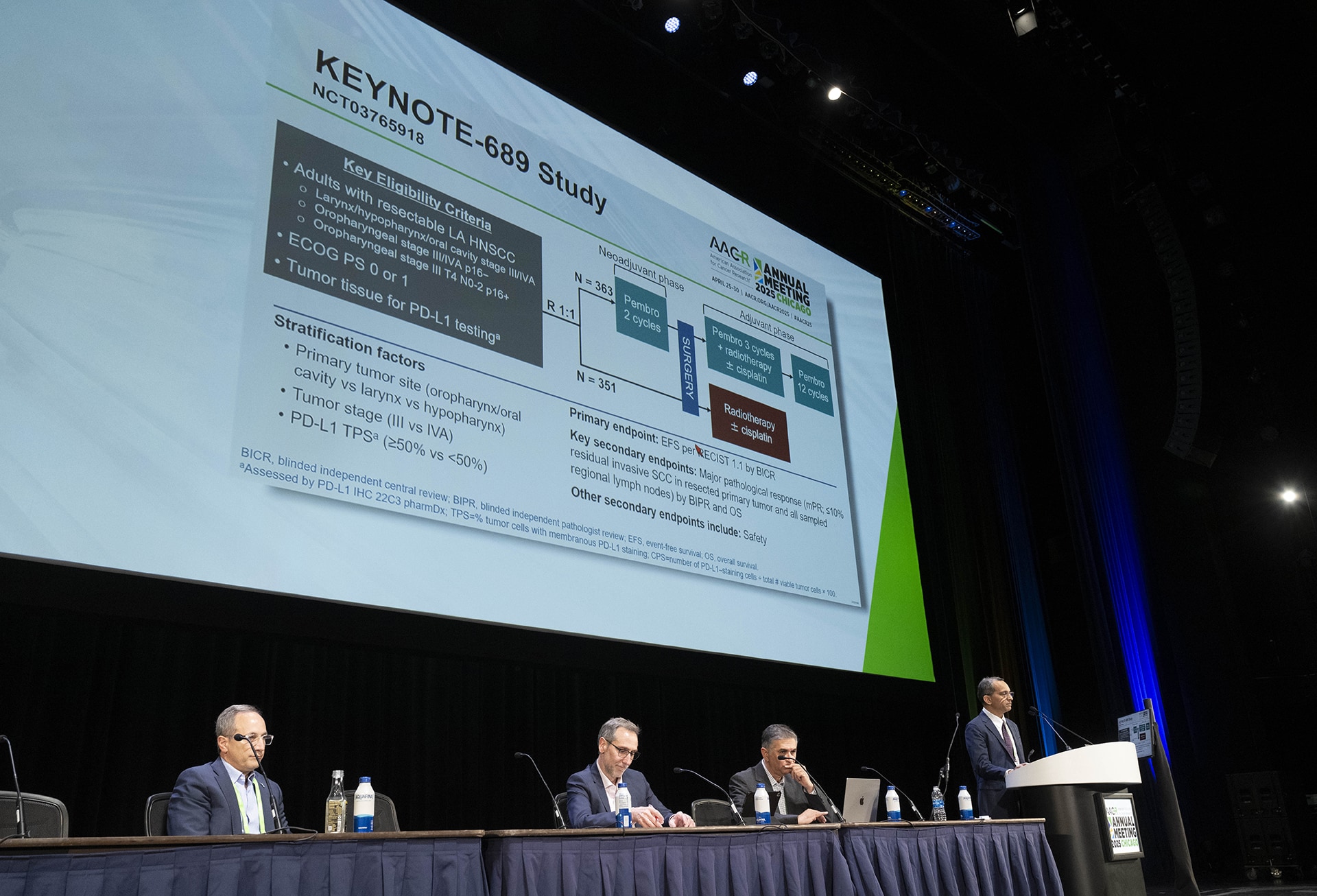
  • Ravindra Uppaluri, MD, PhD, and his colleague Douglas Adkins, MD, have worked to improve these outcomes by exploring the impact of introducing immunotherapy before and after surgery. During the Annual Meeting, Dr. Uppaluri presented results from the phase III KEYNOTE-689 trial, which evaluated whether this approach using the immune checkpoint inhibitor pembrolizumab could minimize recurrence, increase survival, and reduce tumor burden.

    Based on at least three years of follow-up data for half of the patients in the trial, Dr. Uppaluri reported that the addition of pembrolizumab made a clear difference, improving the elimination of tumors prior to surgery and reducing the risk of recurrence compared to those treated with standard-of-care therapy alone. Patients whose tumors had high PD-L1 expression experienced a 13.7% increase in the rate of major pathologic response (at least 90% of the tumor was destroyed at the time of surgery) and a 34% reduction in recurrence.

    In June, based on these results, the FDA approved perioperative pembrolizumab for adults with resectable locally advanced HNSCC that has not previously been treated and expresses PD-L1.

  • Read a summary of this trial on the AACR Blog, Cancer Research Catalyst

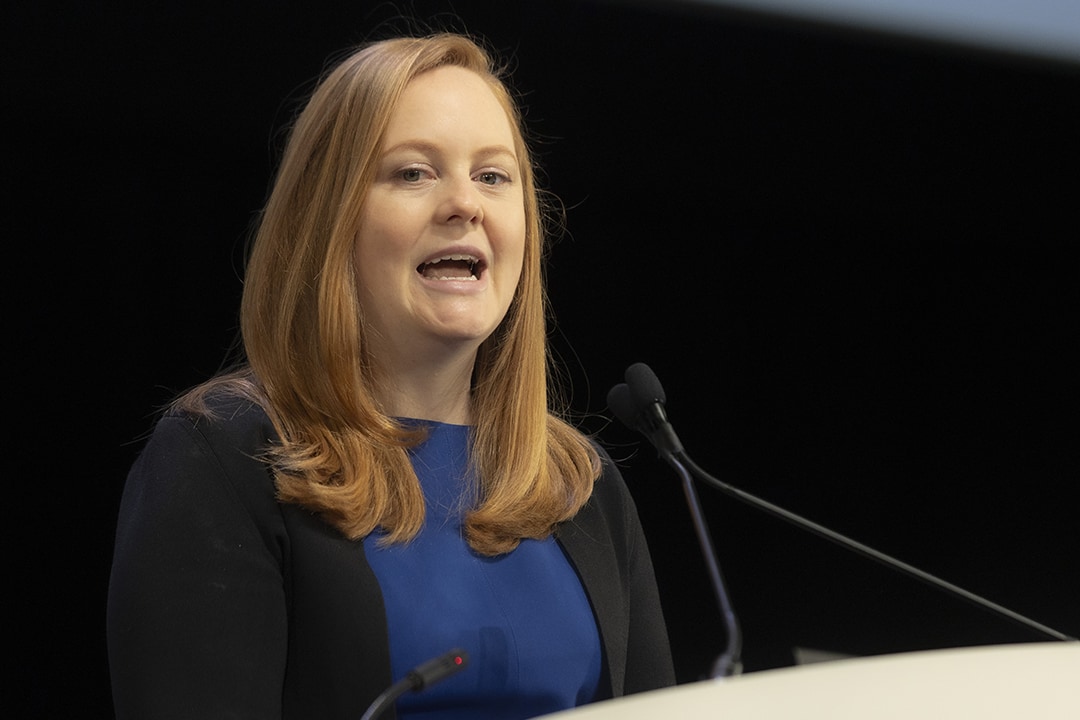
Ravindra Uppaluri presents the results of the KEYNOTE-689 trial at the AACR Annual Meeting 2025
  • Ravindra Uppaluri, MD, PhD, and his colleague Douglas Adkins, MD, have worked to improve these outcomes by exploring the impact of introducing immunotherapy before and after surgery. During the Annual Meeting, Dr. Uppaluri presented results from the phase III KEYNOTE-689 trial, which evaluated whether this approach using the immune checkpoint inhibitor pembrolizumab could minimize recurrence, increase survival, and reduce tumor burden.

    Based on at least three years of follow-up data for half of the patients in the trial, Dr. Uppaluri reported that the addition of pembrolizumab made a clear difference, improving the elimination of tumors prior to surgery and reducing the risk of recurrence compared to those treated with standard-of-care therapy alone. Patients whose tumors had high PD-L1 expression experienced a 13.7% increase in the rate of major pathologic response (at least 90% of the tumor was destroyed at the time of surgery) and a 34% reduction in recurrence.

    In June, based on these results, the FDA approved perioperative pembrolizumab for adults with resectable locally advanced HNSCC that has not previously been treated and expresses PD-L1.

  • Read a summary of this trial on the AACR Blog, Cancer Research Catalyst

  • Beamion LUNG-1 Trial: Oral HER2-targeted Therapy Zongertinib Demonstrates Clinical Benefit in Advanced HER2-mutated Lung Cancer. FDA-approved inhibitors of the human epidermal growth factor receptor 2 (HER2) have been available for breast cancer patients since 1998. However, efforts to develop targeted therapies for HER2-mutated lung cancer have been less successful. In 2022, the antibody-drug conjugate (ADC) trastuzumab deruxtecan (T-DXd) became the first FDA-approved HER2-targeted therapy for lung cancer patients—but the treatment causes significant side effects and is not effective in all patients.
  • Citing the critical need for a therapy that selectively inhibits HER2 while minimizing epidermal growth factor receptor (EGFR)-related side effects, John V. Heymach, MD, PhD, presented the results of the phase Ia/Ib Beamion LUNG-1 trial, which tested a novel HER2 small-molecule inhibitor, zongertinib, in previously treated patients with HER2-mutated non-small cell lung cancers (NSCLC). In the primary analysis cohort of 75 patients whose tumors had mutations in the tyrosine kinase domain (TKD) of HER2, Dr. Heymach reported that 71% had an objective response to zongertinib with a median response duration of 14.1 months. Further, in two exploratory cohorts—of patients whose tumors had HER2 mutations outside the tyrosine kinase domain, and of patients who previously received a HER2-targeted ADC—he reported objective response rates of 30% and 48%, respectively. Dr. Heymach also noted that only 17% of patients experienced grade 3 or higher adverse events, indicating that zongertinib delivered these results with a favorable safety profile, offering hope for patients with HER2-mutated NSCLC.
  • In August, based on the strong response rates reported at the AACR Annual Meeting, the FDA granted accelerated approval to zongertinib for previously treated patients with non-squamous NSCLC with HER2 TKD activating mutations.
  • Oral Investigational Agent Zoldonrasib Elicits Objective Responses in Patients With KRAS G12D-mutated Lung Cancer. A variety of mutations in the KRAS gene drive many cancer types. The first KRAS G12C-targeted therapy (sotorasib) was approved in 2021, and since then investigators have focused on KRAS mutations in an effort to expand this promising class of therapies. To this point, no treatments have been approved targeting the KRAS G12D mutation, which is found in around 4% of NSCLC cases. Kathryn C. Arbour, MD, provided an update on the status of these efforts, presenting the results of a phase I study that assessed the safety and efficacy of the KRAS G12D inhibitor zoldonrasib in previously treated patients with that mutation.
  • The study included 18 patients with NSCLC. Among these patients, 61% had an objective response, and 89% experienced disease control. This outcome compared favorably with that of NSCLC patients on the standard of care treatment (docetaxel), which has an objective response rate of 10–15%. In addition, the typical side effects of treatment with RAS-targeted therapies—which include rash, mucositis, and transaminitis—were not observed in study participants.
  • While Dr. Arbour noted that additional studies with larger cohorts and a longer follow-up time are needed to assess the potential clinical impact of zoldonrasib, she was hopeful that the ability to target KRAS G12D with a well-tolerated therapy could change the treatment landscape for patients with KRAS G12D-mutated NSCLC.
  • Read a summary of these and other clinical trials evaluating NSCLC therapies on the AACR Blog

Kathryn C. Arbour presents the results of a study evaluating zoldonrasib at the AACR Annual Meeting 2025
  • The study included 18 patients with NSCLC. Among these patients, 61% had an objective response, and 89% experienced disease control. This outcome compared favorably with that of NSCLC patients on the standard of care treatment (docetaxel), which has an objective response rate of 10–15%. In addition, the typical side effects of treatment with RAS-targeted therapies—which include rash, mucositis, and transaminitis—were not observed in study participants.
  • While Dr. Arbour noted that additional studies with larger cohorts and a longer follow-up time are needed to assess the potential clinical impact of zoldonrasib, she was hopeful that the ability to target KRAS G12D with a well-tolerated therapy could change the treatment landscape for patients with KRAS G12D-mutated NSCLC.
  • Read a summary of these and other clinical trials evaluating NSCLC therapies on the AACR Blog

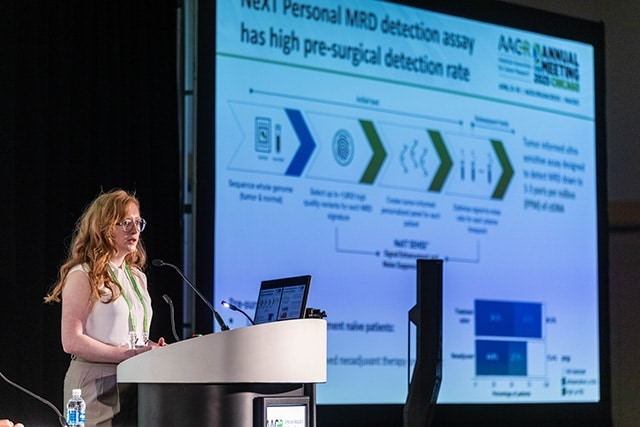
  • VICTORI Study: A Liquid Biopsy-based Assay Detected Recurrence Prior to Imaging in Patients With Resectable Colorectal Cancer. During a Minisymposium session on “Liquid Biopsy: Circulating Nucleic Acids,” Emma Titmuss, MSc, and Jonathan Loree, MD, MS, presented interim results from the VICTORI study, which evaluated the efficacy of an ultrasensitive circulating tumor DNA (ctDNA)-based liquid biopsy assay in detecting signs of recurrence as compared to imaging in patients with colorectal cancer. The study showed that the NeXT Personal assay detected recurrence before imaging in all patients by a median of 198 days earlier—and in some cases, the assay detected recurrence more than a year before the tumor was visible on scans.
  • While preliminary, the results indicated that liquid biopsy assays could detect cancer earlier than traditional imaging, enabling earlier intervention for improved outcomes and reducing exposure to radiation from frequent scans.
  • Read a summary of the VICTORI study and other liquid biopsy breakthroughs presented at the AACR Annual Meeting 2025 on the AACR Blog

Emma Titmuss presents the results of the VICTORI study at the AACR Annual Meeting 2025

NEW DRUGS ON THE HORIZON: THE NEXT WAVE OF CANCER THERAPEUTICS

While the AACR Annual Meeting is a presentation venue of choice for practice-changing clinical trials, it is also a forum for unveiling novel anticancer agents that have recently entered or are preparing to enter clinical trials. The meeting program included three New Drugs on the Horizon sessions, which were organized by the AACR Chemistry in Cancer Research Working Group and featured the first disclosures of 12 cutting-edge therapeutic strategies in a wide range of modalities, including the following:

  • ABBV-969, a first-in-class ADC designed to target prostate-specific membrane antigen (PSMA) and six-transmembrane epithelial antigen of prostate 1 (STEAP1). These antigens are overexpressed in 80% and 90% of metastatic castration-resistant prostate cancer, respectively; a phase I trial to test this promising drug began enrolling patients in March.
  • ABP-102/CT-P72, a bispecific T-cell engager that targets the tumor-associated HER2 antigen and the T-cell receptor-related CD3 complex, and is designed to promote T-cell activation only in the presence of HER2-overexpressing cancer cells. Xenograft studies indicated that this new therapeutic agent controlled the growth of both HER2-overexpressing tumors and HER2-low tumors. An investigational new drug application for ABP-102/CT-P72 was submitted to the FDA in December.
  • AMG 410, a small molecule inhibitor of the KRAS signaling pathway that is mutated in a variety of cancer types. The drug—which targets several common KRAS mutations—showed promise in pancreatic xenograft models and is being evaluated in a first-in-human study that began enrolling patients in July.
  • Read a summary of all 12 first disclosures presented in the New Drugs on the Horizon sessions at the AACR Annual Meeting 2025 on the AACR Blog

DYNAMIC PLENARY SESSIONS

The cancer research community came together throughout the Annual Meeting to attend a series of cutting-edge Plenary Sessions. The central event of the meeting was the Opening Plenary Session titled “Unifying Cancer Science and Medicine: A Continuum of Innovation for Impact.” Moderated by Drs. Siu and Vander Heiden, the session addresses a range of topics, including the influence of extrachromosomal DNA in cancer, understanding cancer ecosystems, personalized cancer vaccines, and overcoming the undruggable nature of KRAS.

The plenary program also featured a Discovery Science session on “Novel Mechanisms Influencing Cancer Evolution,” as well as sessions on “Opportunities in Predictive Oncology,” “Targeting the Cancer Ecosystem,” and “Innovative Technologies Driving Advances in Cancer Research.”

PRESIDENTIAL SELECT SYMPOSIUM: LEVERAGING SCIENCE TO REDUCE THE CANCER BURDEN WORLDWIDE

Cancer is a global scourge, and defeating it requires a global effort. In recognition of the critical need for collaboration among cancer researchers around the world, 2024–2025 AACR President Patricia M. LoRusso, DO, PhD (hc), FAACR, highlighted international efforts to attack the cancer problem in her Presidential Select Symposium at the Annual Meeting.
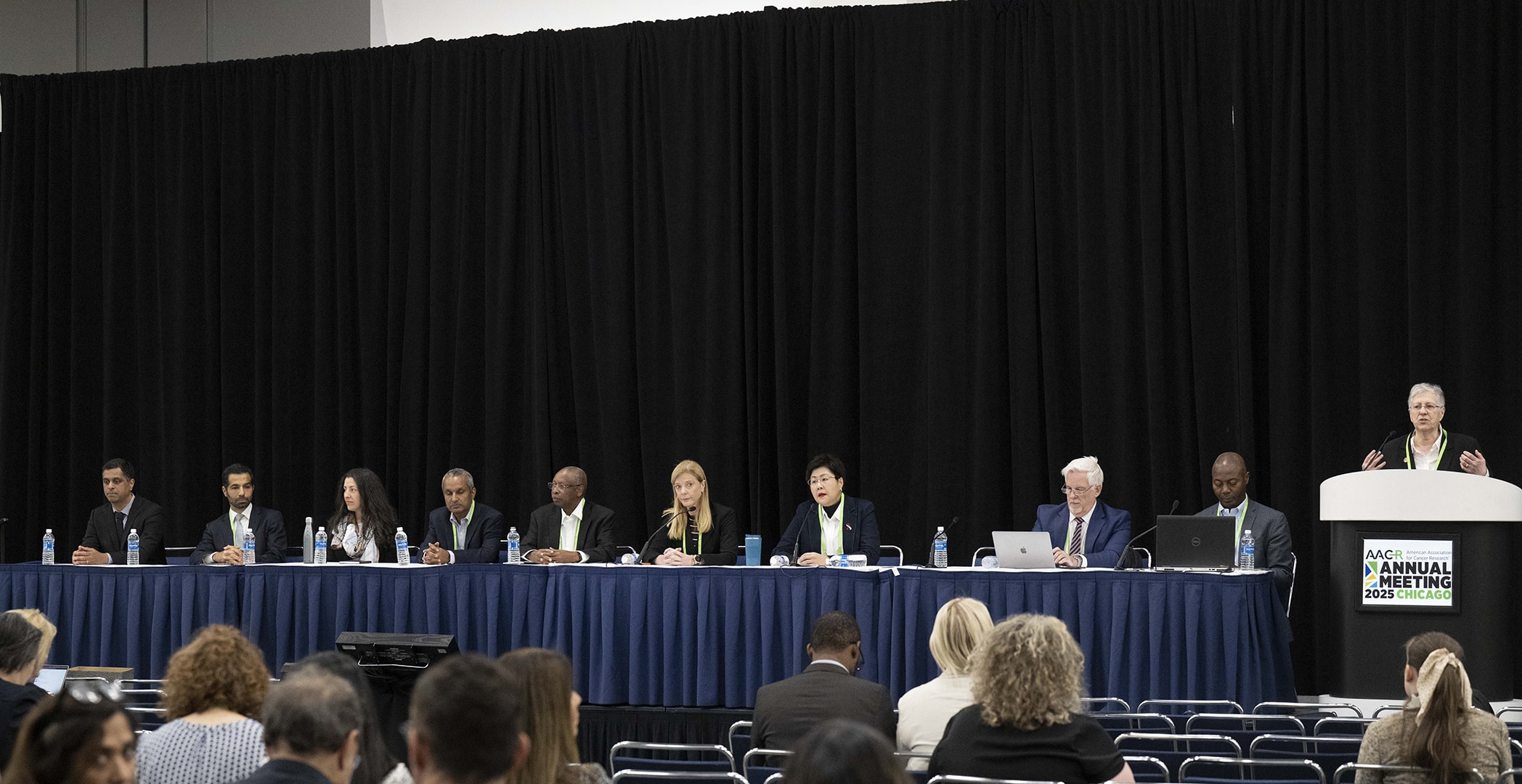
In presentations and a panel discussion, the Symposium participants discussed interventions in a wide range of countries, including a clinical trial demonstrating the efficacy of single-dose HPV vaccination in Costa Rica, a teleconsultation project that enabled people in Malaysia to screen for oral cancer using their cell phones, the development of mobile endoscopy suites to screen for esophageal cancer in Kenya, and the use of artificial intelligence tools to support overburdened oncologists in India.

2024–2025 AACR President Patricia M. LoRusso speaks during the Presidential Select Symposium at the AACR Annual Meeting 2025

In presentations and a panel discussion, the Symposium participants discussed interventions in a wide range of countries, including a clinical trial demonstrating the efficacy of single-dose HPV vaccination in Costa Rica, a teleconsultation project that enabled people in Malaysia to screen for oral cancer using their cell phones, the development of mobile endoscopy suites to screen for esophageal cancer in Kenya, and the use of artificial intelligence tools to support overburdened oncologists in India.

STATE-OF-THE-ART EDUCATIONAL PROGRAM

Under the leadership of Chair Matthew G. Vander Heiden, the AACR Education Committee developed a comprehensive educational program for the Annual Meeting, organizing nearly 70 Educational Sessions and Methods Workshops. In addition to the long-running series on Chemistry to the Clinic and Clinical Trial Design, the educational program covered a wide range of topics, including:

  • Next Generation Antibody Drug Conjugates
  • Accelerating Cancer Research with AI and Data Science: Multi-scale Multi-modal Integration for Deeper Insights
  • Lineage Plasticity and Resistance to Cancer Therapy
  • Escape Versus Elimination: Understanding the Interplay Between Cancer and the Adaptive Immune System
  • Statistical and Design Considerations for Dose Optimization
  • Innovative Approaches in TME Biology: From Profiling to Function
  • Integrating Computational Pathology, AI, and Spatial Multi-Omics in 2D and 3D
  • Reprogramming Tumor Immunity: From Suppression to Therapeutic Activation

Media Coverage

The AACR Annual Meeting 2025 generated global interest, as the innovative cancer science presented in Chicago produced a significant amount of news coverage and social media activity.

15

Scientific news releases were distributed.

182

Reporters registered to cover the meeting.

6,000

Media mentions were generated.

16,000

Tweets mentioned the #AACR25 hashtag.

3,850

Participants joined the Annual Meeting conversation on X/Twitter.

arrow to previous page Progress Against Cancer in 2025

Progress Against Cancer in 2025

Scientific Publishing

arrow to next page Scientific Publishing