
Sections

sections button arrow
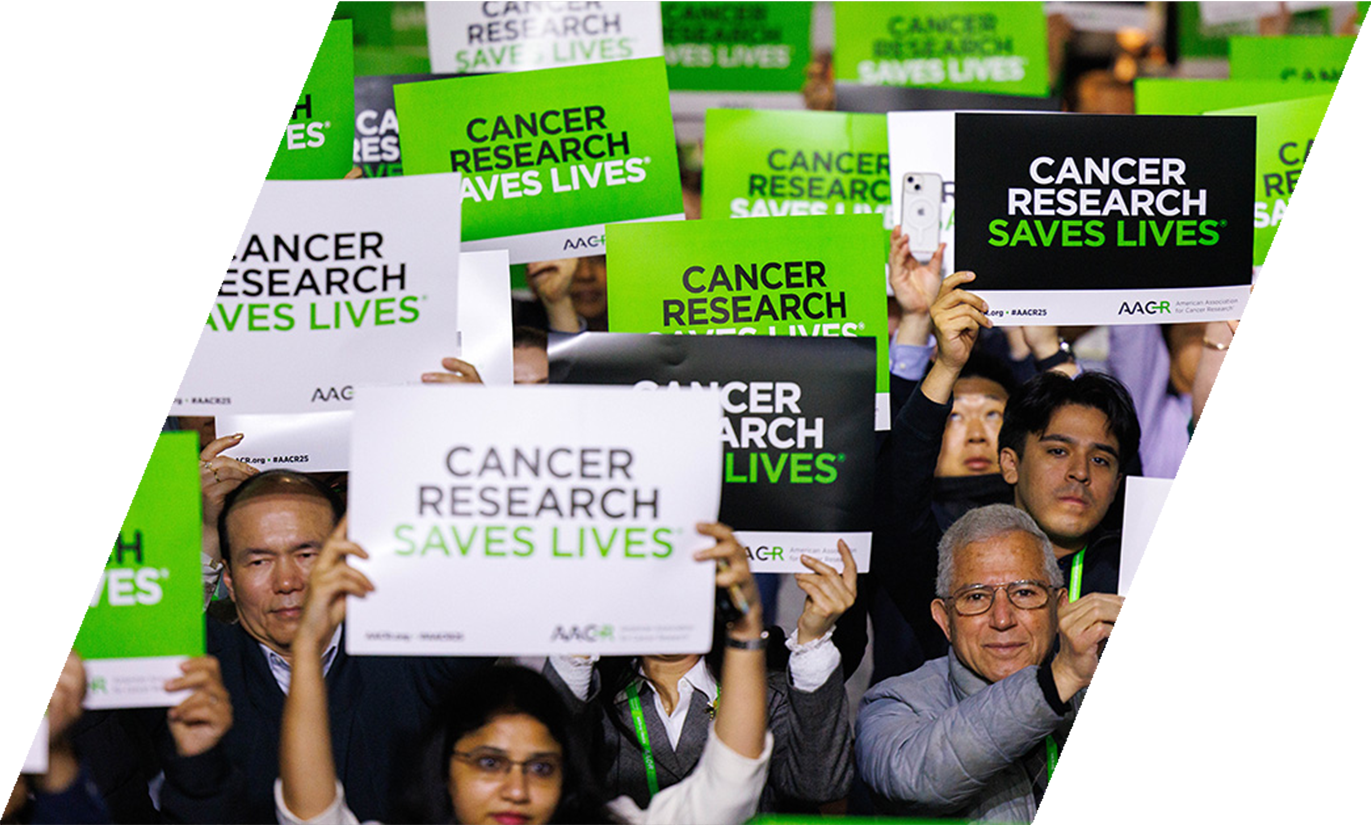
AACR Annual Meeting attendees holding up signs reading Cancer Research Saves Lives

Defending Science and Protecting Patients

tooltip iconAttendees participate in a demonstration of support for the NIH and federally funded cancer research during the Opening Ceremony of the AACR Annual Meeting 2025.

Cancer Research at a Crossroads

2025 was a year of crisis for the cancer research community, as the Administration dismissed dedicated scientists and other public servants at the National Institutes of Health (NIH), cut federal funding for leading cancer centers and other research institutions, and proposed cutting the fiscal year (FY) 2026 budget for NIH by nearly 40%. Through a wide range of initiatives, AACR spent the year leading efforts to defend medical research and sustain progress against cancer for all populations.

AACR STATEMENTS: GALVANIZING THE CANCER COMMUNITY

With each new development in the ongoing crisis, AACR took strong positions in defense of cancer research and called on scientists, clinicians, other health care professionals, cancer survivors, and patient advocates to join them:

  • February 18: AACR Statement and Call to Action Regarding the Administration’s Recent Actions Affecting NIH and the American People. The Administration’s first wave of executive orders reduced the size of the NIH’s scientific workforce, froze federal grants that were awarded to leading research institutions and cancer centers, and restricted the efforts of remaining NIH staff to communicate and collaborate with the broader scientific community. AACR issued a strong statement outlining the impact of these disruptions on patients, calling on Congress to restore stability to NIH, and urging the American people to contact their representatives and express their support for NIH.
  • Read AACR’s statement in defense of NIH

  • May 6: AACR Calls on Congress to Summarily Reject the President’s FY2026 Budget Proposal for NIH. In response to the President’s FY2026 budget—which proposed reducing the NIH budget by $18 billion—AACR called on Congress to reject these devastating cuts and allocate a robust funding increase to the “crown jewel” of the federal government.
  • Read AACR’s statement rejecting the Administration’s devastating FY2026 budget
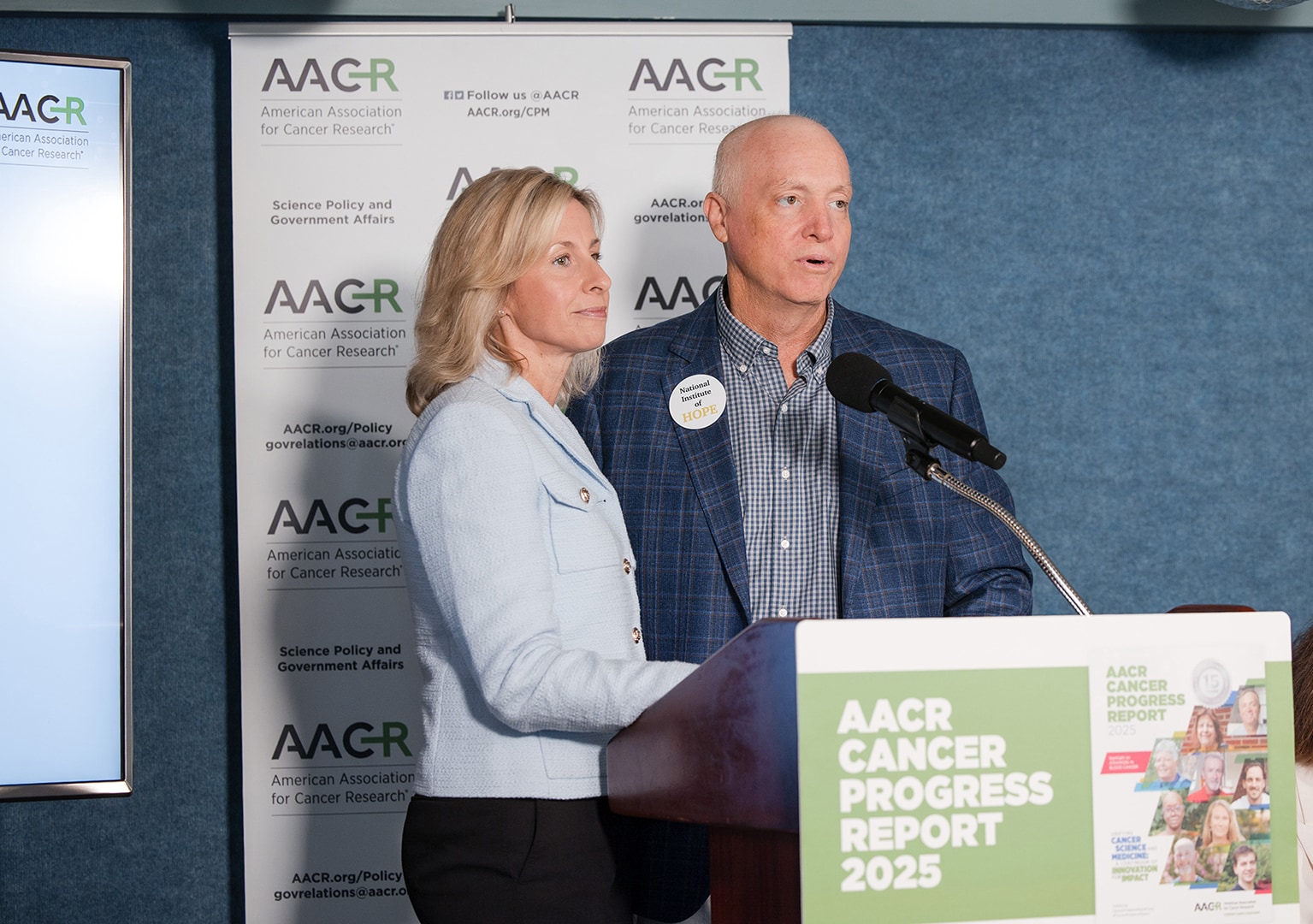
Richard and Michelle Schlueter

AACR ANNUAL MEETING 2025: HIGHLIGHTING THE THREATS TO CANCER SCIENCE AND MEDICINE

The AACR Annual Meeting is the focal point of the cancer community, where all stakeholders gather to share the latest advances in cancer science and medicine. In April, the AACR Annual Meeting 2025 was also the epicenter of the resistance to the Administration’s attempts to disrupt and defund the cancer research enterprise.
  • Closing the Funding Gap: AACR Trailblazer Grant Program. During the Opening Ceremony, AACR CEO Margaret Foti, PhD, MD (hc), condemned the upheaval in biomedical research funding and announced AACR’s bold response: the AACR Trailblazer Cancer Research Grant Program. This new $15 million funding initiative, which is the largest single grant program ever offered by AACR, includes nine $1 million grants for early-stage investigators and six $1 million grants for mid-career investigators, to be distributed over three years. The grants—whose recipients will be announced at the AACR Annual Meeting 2026—will fund paradigm-shifting research to advance the understanding of cancer biology, drive groundbreaking translational science, and improve patient outcomes.

Watch AACR Annual Meeting attendees demonstrate their support for federally funded cancer research.

  • Closing the Funding Gap: AACR Trailblazer Grant Program. During the Opening Ceremony, AACR CEO Margaret Foti, PhD, MD (hc), condemned the upheaval in biomedical research funding and announced AACR’s bold response: the AACR Trailblazer Cancer Research Grant Program. This new $15 million funding initiative, which is the largest single grant program ever offered by AACR, includes nine $1 million grants for early-stage investigators and six $1 million grants for mid-career investigators, to be distributed over three years. The grants—whose recipients will be announced at the AACR Annual Meeting 2026—will fund paradigm-shifting research to advance the understanding of cancer biology, drive groundbreaking translational science, and improve patient outcomes.
  • Standing in Solidarity. During the Opening Ceremony at the AACR Annual Meeting 2025, 2024–2025 AACR President Patricia M. LoRusso, DO, PhD (hc), FAACR, led attendees in a united demonstration of support for federally funded cancer research. More than 10,000 members of the cancer research community raised placards declaring that “Cancer Research Saves Lives®.”
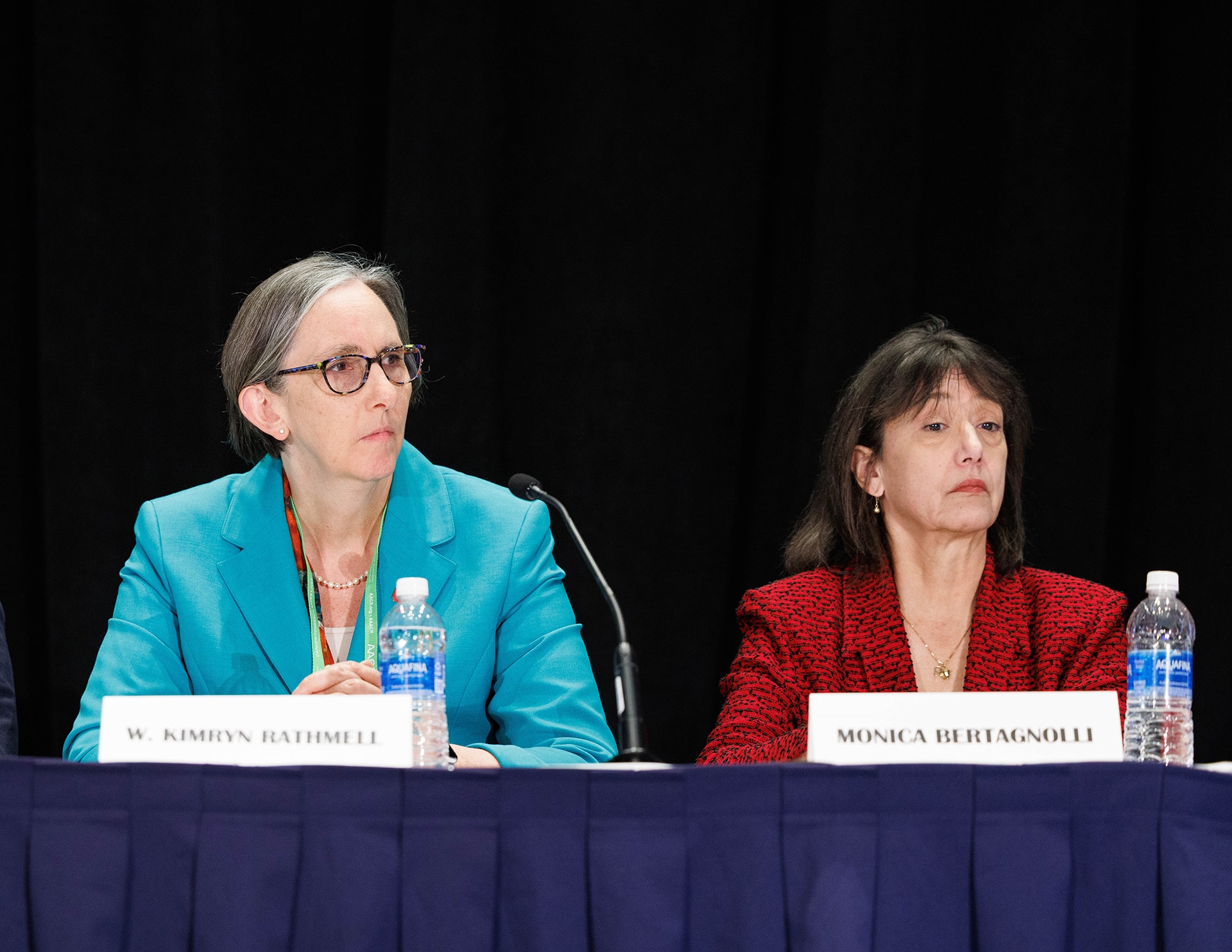
Kimryn Rathmell and Monica Bertagnolli

ONE MISSION, ONE VOICE

Throughout the summer and fall, AACR led a comprehensive outreach effort to AACR members and the overall cancer research community. Social media posts and twice-weekly emails highlighted the risks that the Administration’s actions posed to cancer science and medicine, and urged members of the community to contact their Congressional representatives and advocate for NIH funding. Highlights of the outreach campaign included the following:
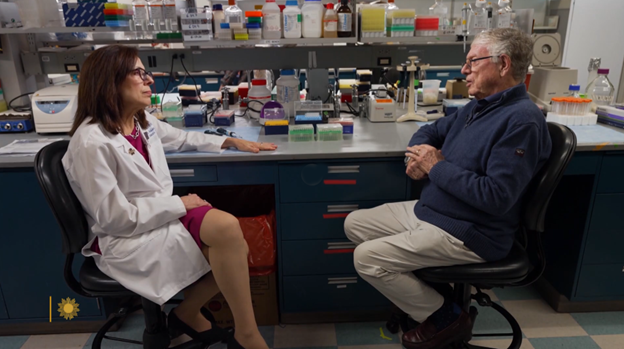
  • Impact on Cancer Patients. Former AACR President Elizabeth M. Jaffee, MD, FAACR, and AACR members Steven A. Rosenberg, MD, PhD, FAACR, and George Weiner, MD, spoke to Ted Koppel for a CBS Sunday Morning story about the impact of delays on NIH funding disbursements on cancer patients.
  • Watch the CBS story

  • Economic Activity Generated by NIH-Funded Research. A recent report from United for Medical Research indicated that every $1.00 of NIH research funding in FY2024 generated $2.56 in economic activity.
  • Read the United for Medical Research Report

Elizabeth M. Jaffee and Ted Koppel
  • Disruptions to Clinical Trials. During the special session she held at the AACR Annual Meeting, Dr. LoRusso noted that disruptions to federally funded biomedical research could force the delay or cancellation of clinical trials of experimental therapeutics for a wide range of diseases, including cancer.
  • Congressional Budget Office Outlines Effects of NIH Cuts. A report from the nonpartisan Congressional Budget Office (CBO) projected that the effect of a permanent 10% reduction in NIH funding—which is one-fourth the size of the proposed 40% cut in the FY2026 budget—would amplify over time and eventually result in the approval of more than 20 fewer drugs each decade.
  • Read the CBO report

2024–2025 AACR President Patricia M. LoRusso discusses the impact of funding disruptions on clinical trials.

  • Congressional Budget Office Outlines Effects of NIH Cuts. A report from the nonpartisan Congressional Budget Office (CBO) projected that the effect of a permanent 10% reduction in NIH funding—which is one-fourth the size of the proposed 40% cut in the FY2026 budget—would amplify over time and eventually result in the approval of more than 20 fewer drugs each decade.
  • Read the CBO report

  • Michael Methner: Survivor and Advocate. AACR shared the story of Michael Methner, an 11-year-old cancer survivor featured in the AACR Cancer Progress Report 2024. At a briefing in Washington, D.C., to present the report to Congress, he took the microphone and asked legislators to continue their long-standing bipartisan support for medical research that benefits children like him.
  • Read Michael’s story on the AACR Blog

Cancer survivor Michael Methner and his parents, Mike and Emily, share his story.

LEADING THE CHARGE ON CAPITOL HILL

While the AACR Office of Science Policy and Government Affairs (OSPGA) maintains an ongoing dialogue with policymakers about the critical value of federal funding for cancer research, those efforts took on an increased urgency in 2025. AACR engaged with Congress in a myriad of ways over the past year to defend cancer and other biomedical research:
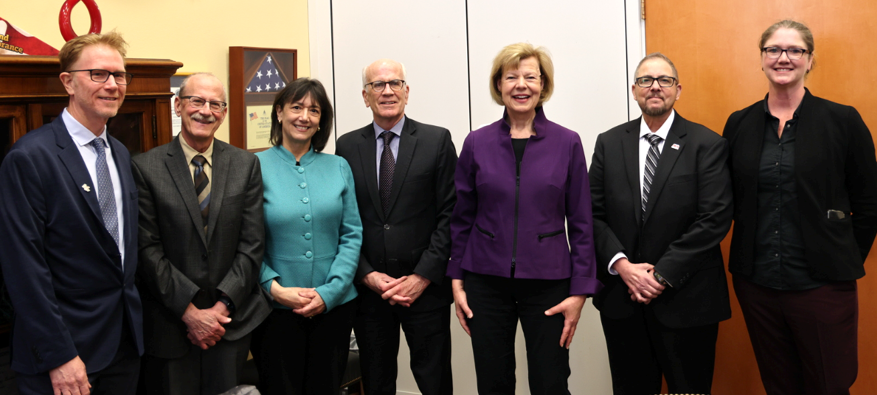
  • Expert Testimony on the Impact of NIH. In March, Senators Tammy Baldwin (D-WI) and Peter Welch (D-VT) convened a Congressional Forum on Capitol Hill titled “Cures in Crisis: What Gutting NIH Research Means for Americans with Cancer, Alzheimer’s, and Other Diseases.” During preparations for the Forum, Senate Democrats asked AACR to assist in identifying a cancer patient who could participate as a witness and testify about the critical value of NIH-funded cancer clinical trials. AACR staff coordinated testimony for Dr. Larry Saltzman, a chronic lymphocytic leukemia survivor who was featured in the 2022 AACR Report on the Impact of COVID-19 on Cancer Research and Patient Care. Dr. Saltzman—who provided testimony along with four other witnesses, including AACR member and former NIH Director Monica M. Bertagnolli, MD—has participated in six clinical trials and has been on more than a dozen different treatments since his initial diagnosis in 2010. During his testimony, he noted that many patients cannot afford to participate in clinical trials without NIH support. “For them,” he stated, “NIH funding is the difference between a chance and no chance.”
  • Learn more about the Congressional Forum on the AACR Blog

  • Watch video highlights of the Congressional Forum

Participants in Senator Tammy Baldwin’s Congressional Forum on the impact of cutting NIH funding.
  • Hill Days. In February, AACR’s annual Early-career Hill Day convened 18 Associate Members from 14 states to impress upon Congress how the Administration’s actions are undermining the next generation of leaders in cancer research. In May, AACR partnered with the Association of American Cancer Institutes (AACI) for their annual Joint Hill Day, connecting 150 cancer center directors and other leaders with their representatives to advocate for bipartisan investment in the NIH and NCI.
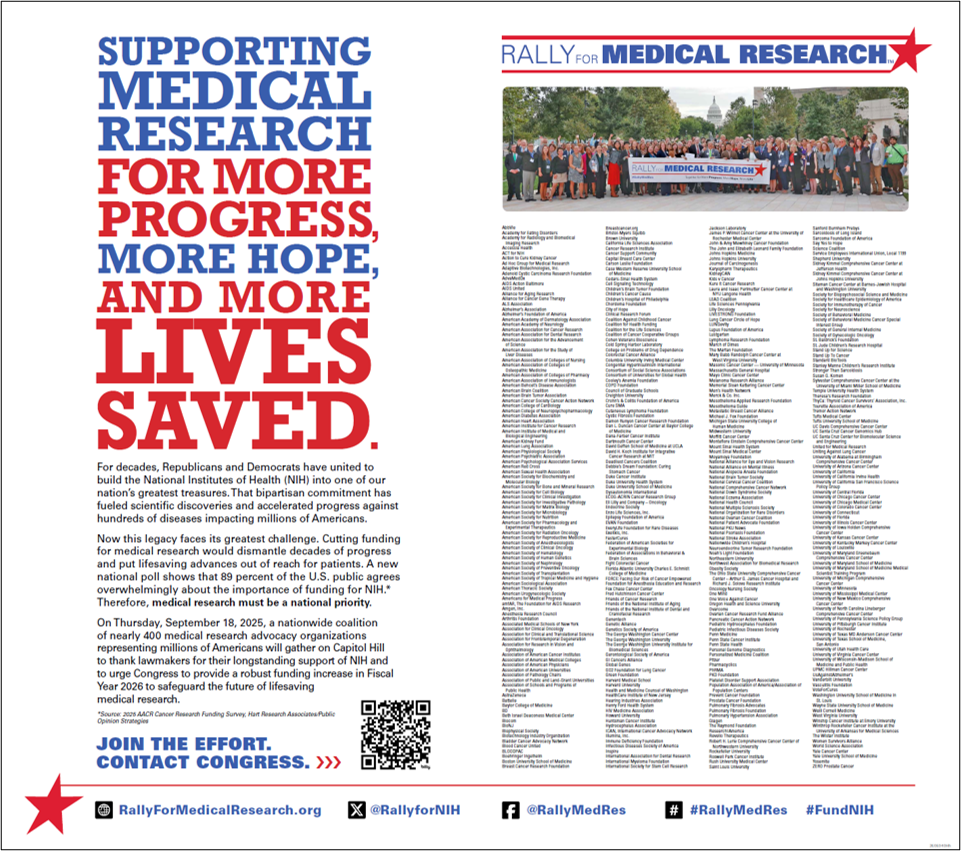
  • Rally for Medical Research. These efforts continued in September with the Rally for Medical Research. As the lead supporter and founding organizer of the Rally since 2013, AACR has been instrumental in galvanizing the entire biomedical research community to advocate for sustained and predictable federal funding for medical research. This 13th edition of the Rally was the largest ever, bringing more than 430 advocates of all areas of medical research from 39 states to Capitol Hill to meet with their members of Congress. Two days before the Rally, AACR coordinated with the nearly 400 medical research advocacy organizations that supported the event to publish a full-page advertisement in the Wall Street Journal urging Congress to safeguard the future of lifesaving medical research.
Full-page ad from the Wall Street Journal featuring Rally for Medical Research participants

MAKING THE CASE FOR FEDERALLY FUNDED CANCER RESEARCH

AACR also stepped up its efforts to provide policymakers with the resources they need to make informed science policy decisions, commissioning a national bipartisan survey to measure voters’ attitudes about federal funding for medical research and cancer research. During the release event for the AACR Cancer Progress Report 2025—which catalogues the progress against cancer made over the past year and underscores the wave of federally funded scientific breakthroughs that made this progress possible—AACR shared the results of the survey, which demonstrated that Americans support federal funding for cancer research by an overwhelming margin:

  • 89% of voters supported the federal government using taxpayer dollars to fund medical research
  • 83% of respondents favored increasing funding for cancer research
  • 71% think increasing federal funding should be a top congressional priority
AACR presents the result of a national survey of voters’ attitudes about federal funding for medical research.

DRIVING POSITIVE CHANGE

Despite the myriad challenges of the past year, there was reason for hope. As the year came to a close, there were indications that the efforts of AACR and other stakeholders have had an impact on budget negotiations. In July, Senator Britt and 13 Republican colleagues called on the Office of Management and Budget to lift its abrupt hold on NIH grant funding and immediately disburse all FY2025 funds for the Institutes. And entering the new year, the U.S. Senate and House of Representatives were working on a funding package that was projected to increase NIH funding by $415 million (including $128 million for the NCI).

While progress has been made, the Administration’s policies will continue to threaten cancer science and medicine in the coming year. AACR is committed to advocating for sustained, robust funding for NIH—and we urge all members of the cancer research community in the U.S. to continue calling on their representatives to protect the future of cancer research.

arrow to previous page Welcome

Welcome

Progress Against Cancer in 2025

arrow to next page Progress Against Cancer in 2025