Sections

sections button arrow
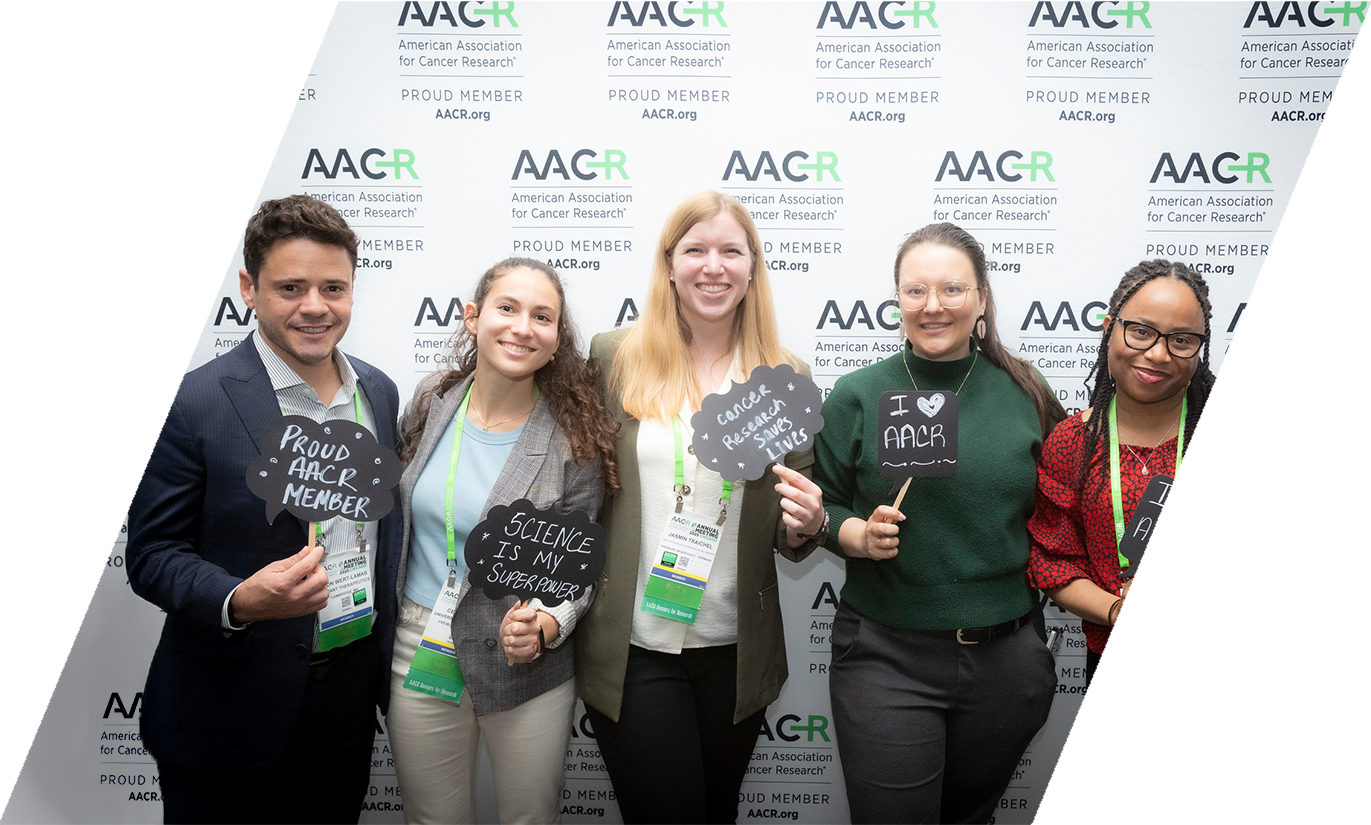
New AACR members attending a mixer at the AACR Annual Meeting 2025

AACR Membership

tooltip iconNew AACR members attended a mixer at the AACR Annual Meeting 2025 in Chicago. AACR welcomed more than 5,700 new members in 2025.

Membership by the Numbers

Across the full spectrum of cancer science, AACR members catalyze breakthroughs to benefit patients with cancer. AACR programs and initiatives build relationships among scientists, clinicians, and other health care professionals and align their efforts in support of its mission to prevent and cure all cancers.
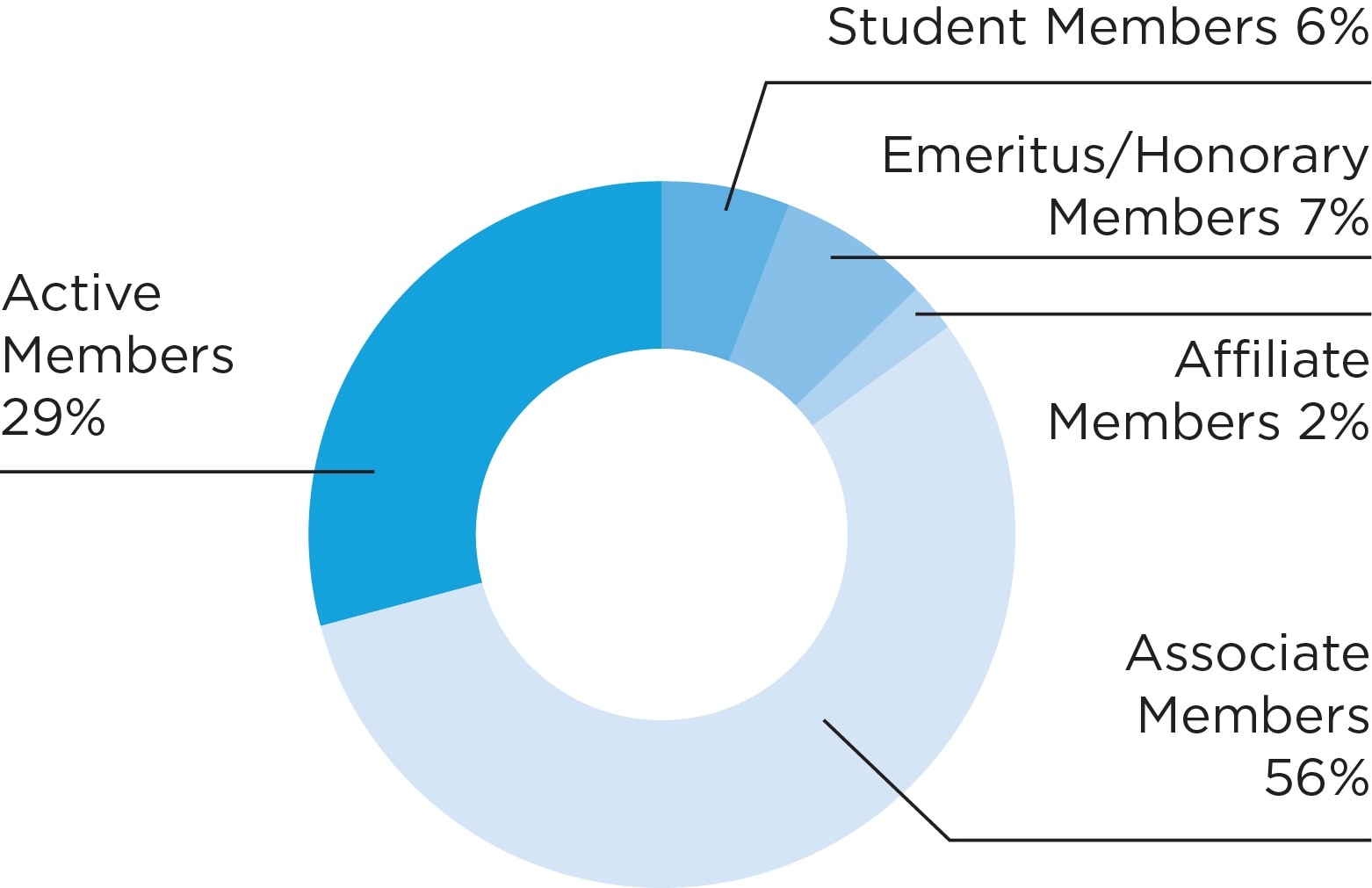
Members by Category

Chart: AACR members by category: Active members, 29 percent; Associate members, 56 percent; Emeritus/Honorary members, 7 percent; Student members, 6 percent; Affiliate members, 2 percent.

Active Members: Available to qualified oncologists and scientists of any nation who have established a record of scholarly activity, or who have made substantial contributions to cancer research.

Associate Members: Graduate students, medical students and residents, and clinical and postdoctoral fellows who are enrolled in educational or training programs that could lead to careers in cancer research.

Affiliate Members: Health professionals working in support of cancer and biomedical research and educators or other professionals who are interested in and/or make substantial contributions to the cancer field.

Student Members: Individuals who have manifested an interest in cancer and related biomedical science and who are enrolled in a program leading to a high school diploma or bachelor’s degree.

Emeritus Members: Open to Active members who have attained the age of 70 years and members who are disabled.

61,951

Individuals were members of AACR as of December 2025. The AACR is the first and largest cancer research organization dedicated to accelerating the conquest of cancer.

5,704

New members joined AACR in 2025.

77

Nobel Laureates have been members of AACR.

5,406

Individuals have been AACR members for more than 25 years.

341

Individuals have been AACR members for more than 50 years.

143

Countries are represented by AACR members.

All data as of December 31, 2025.
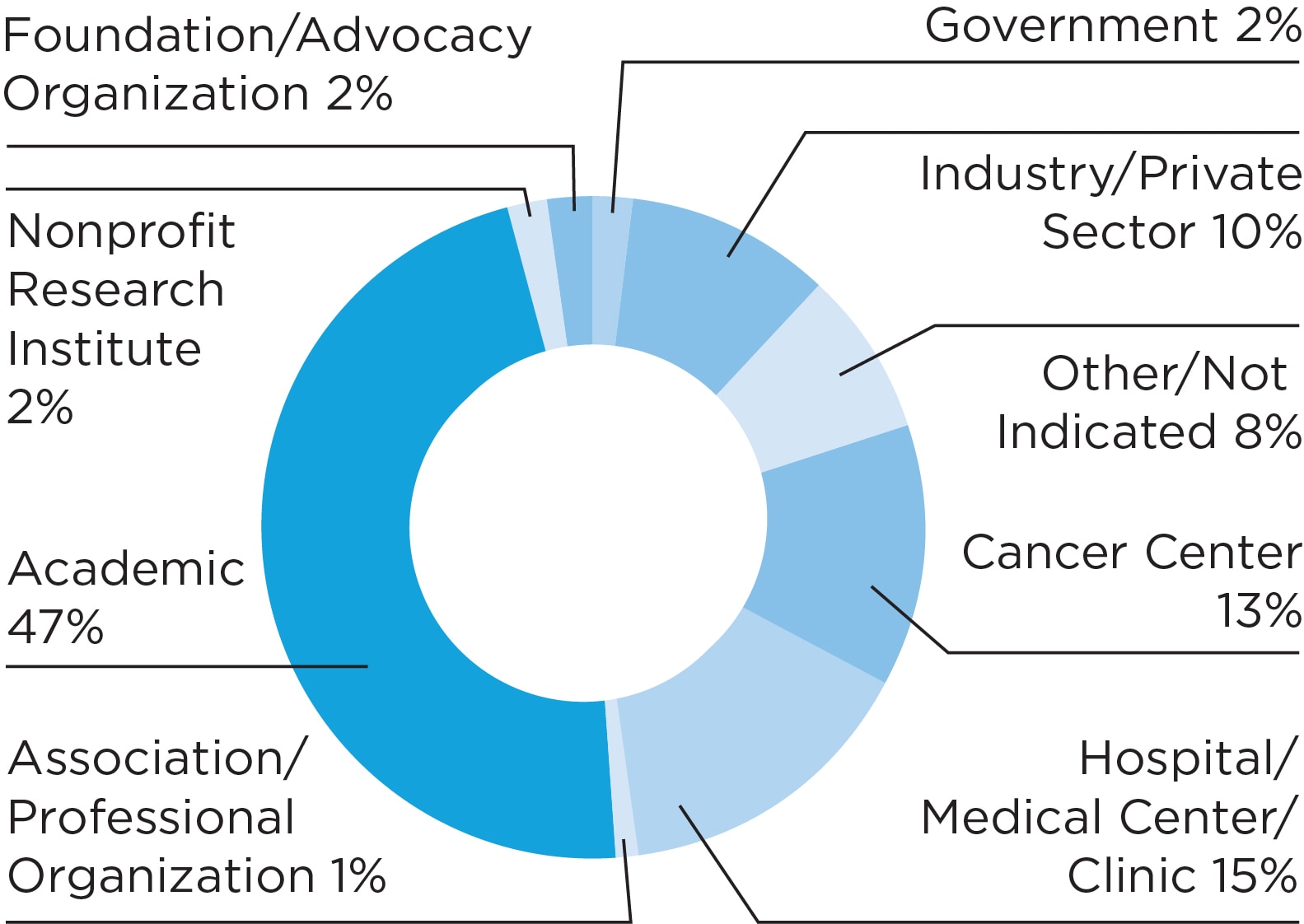
Members by Work Setting

Chart: AACR members by work setting chart: academic, 47 percent; cancer center 13 percent; industry/private sector, 10 percent; hospital/medical center/clinic, 15 percent; foundation/advocacy organization, 2 percent; nonprofit research institute, 2 percent; association/professional organization, 1 percent; government, 2 percent; other/not indicated, 8 percent.

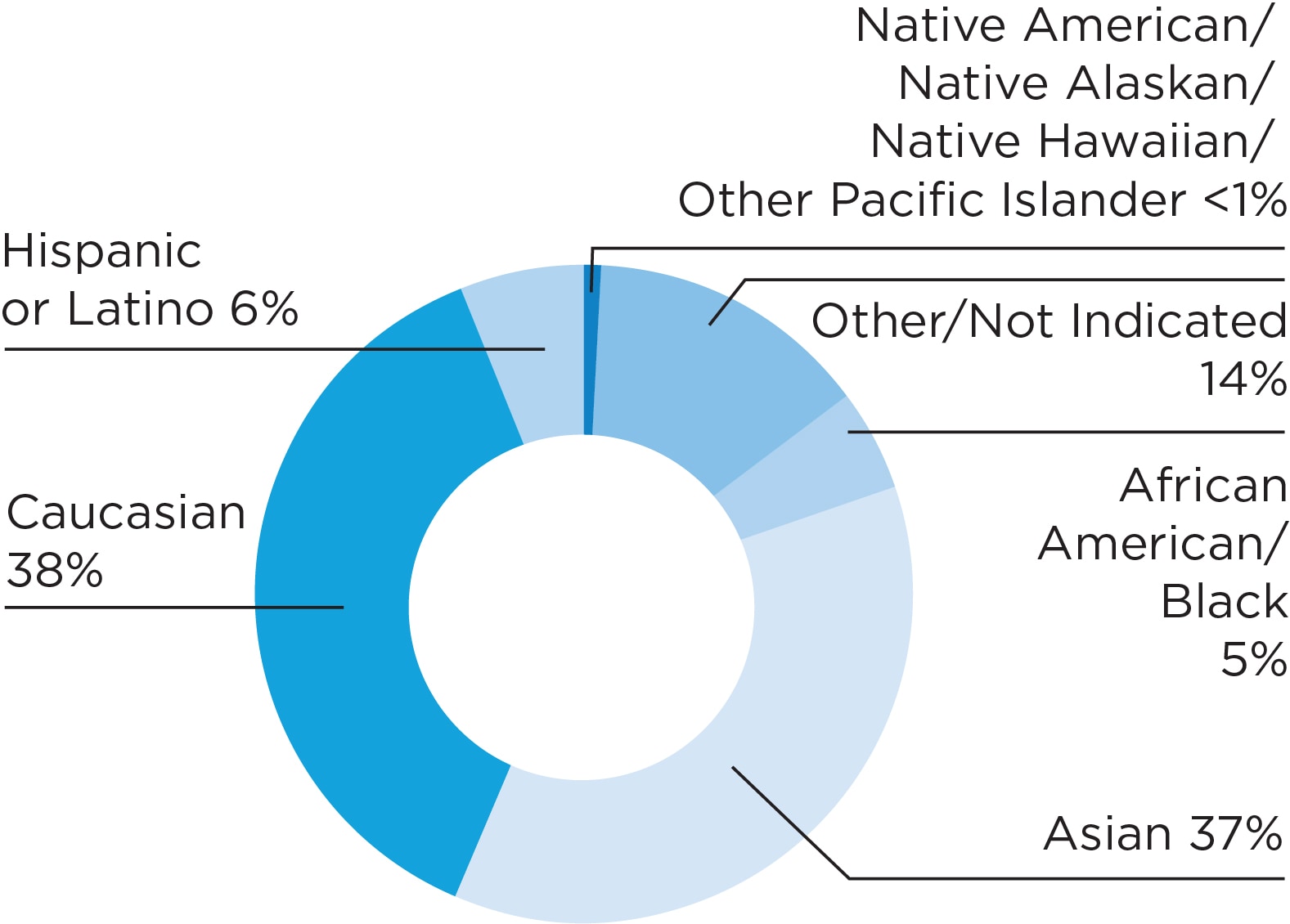
Members by Race/Ethnicity

Chart: AACR members by race/ethnicity: Caucasian, 38 percent; Asian, 37 percent; Hispanic or Latino, 6 percent; African American/Black, 5 percent; Native American/Native Alaskan/Native Hawaiian/Other Pacific Islander, <1 percent; Other/not indicated, 14 percent.

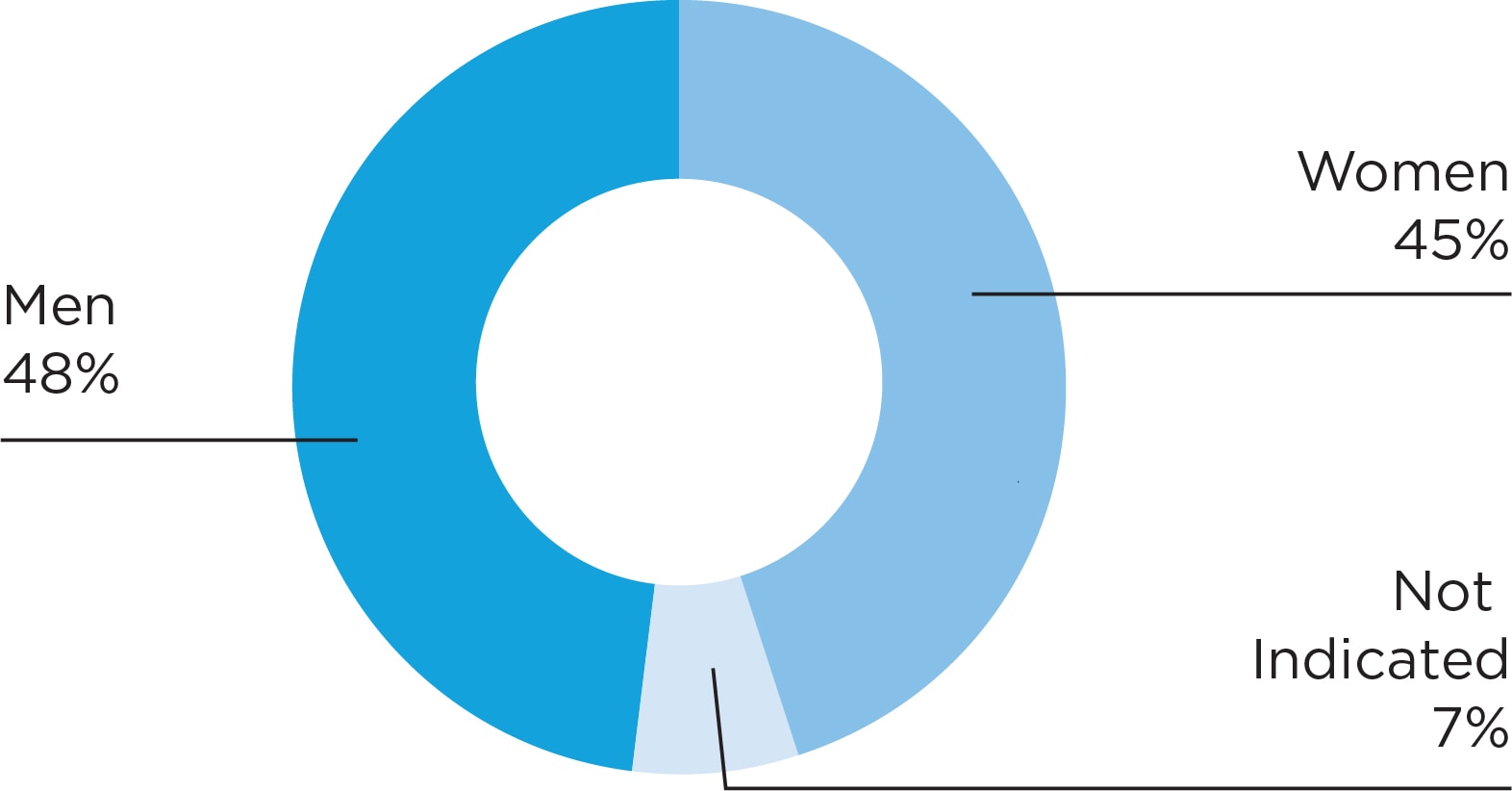
Members by Gender

Chart: AACR members by gender: Men, 48 percent; women, 45 percent; not indicated, 7 percent.

EXPANDING THE BOUNDARIES OF THE CANCER RESEARCH COMMUNITY

Scientists and clinicians drive advances in cancer research and care, but enduring progress against cancer depends on the contributions of a wide range of stakeholders. AACR has welcomed these critical contributors into the cancer research community through two special membership categories, each of which celebrated its 25th anniversary in 2025:

  • Student Membership. AACR membership includes more than 1,500 high school, undergraduate, and postbaccalaureate students who are interested in pursuing careers in science and cancer research. Through programs and initiatives targeted to their needs, AACR stewards the next generation of cancer scientists and clinicians.
  • Affiliate Membership. AACR welcomes a wide range of cancer research supporters into its membership ranks through this special category. Affiliate Members include health care professionals working in support of cancer and biomedical research, cancer survivors and advocates, and educators or other professionals who are interested in or make contributions to the cancer field. More than 2,100 of these partners are counted among AACR members, working alongside dedicated scientists and clinicians to advance the organization’s mission.

Diversifying the Cancer Workforce

MINORITIES IN CANCER RESEARCH
(2025 COUNCIL CHAIR: CARMEN E. GUERRA, MD, MSCE)

Minorities in Cancer Research (MICR) is a membership group within AACR committed to preventing and curing cancer while meeting the professional needs and advancing the careers of minority scientists. The MICR Council acts as an advisory body to AACR leadership on issues of concern to minority investigators, including the elimination of cancer health disparities.
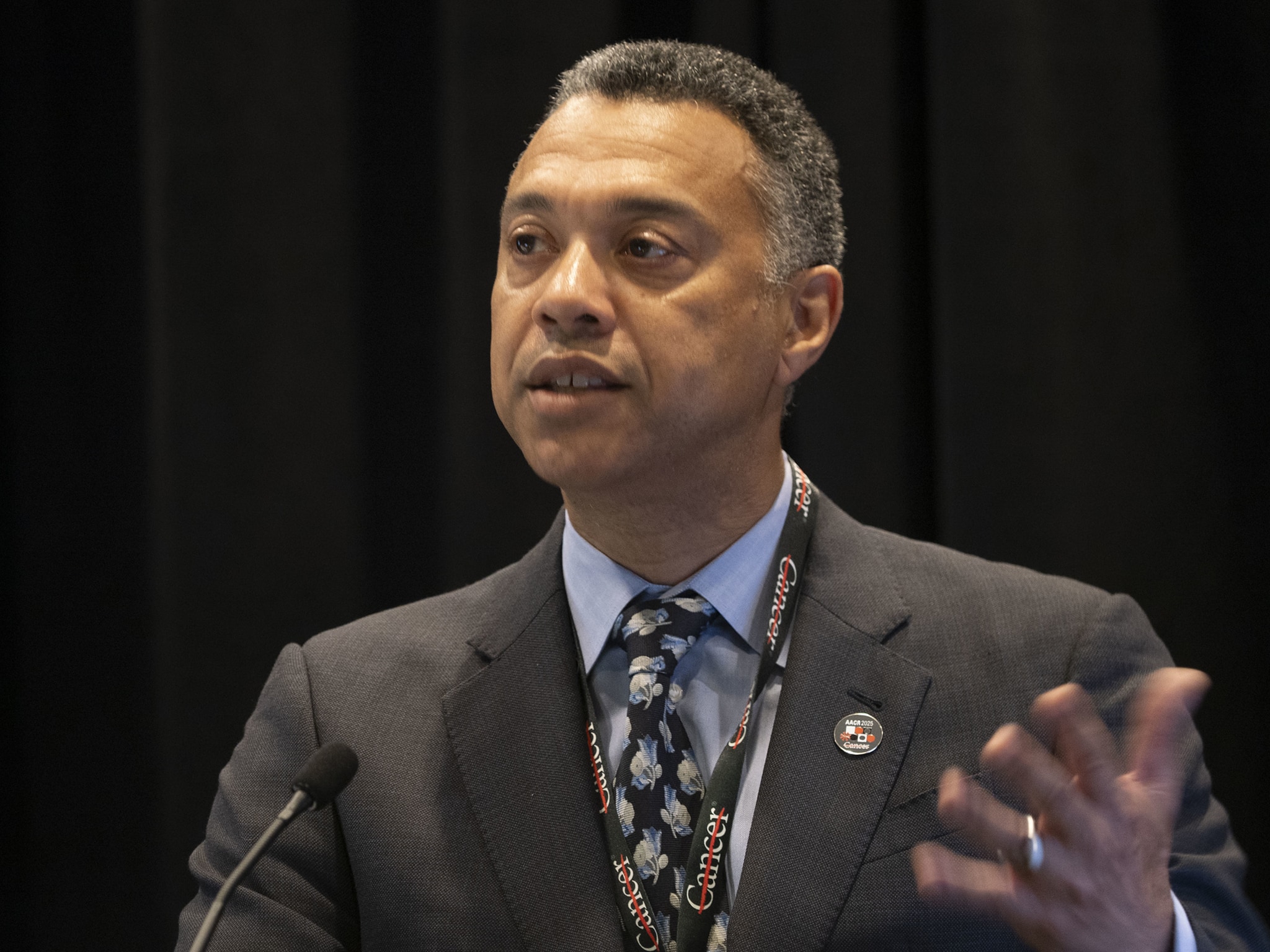
  • AACR-MICR Jane Cooke Wright Lectureship. This lectureship highlights an outstanding scientist who has made meritorious contributions to the field of cancer research and who has, through leadership or by example, furthered the advancement of minority investigators in cancer research. The 2025 edition of the lectureship recognized Christopher R. Flowers, MD, head of the Division of Cancer Medicine and chair of the Department of Lymphoma and Myeloma at The University of Texas MD Anderson Cancer Center. Dr. Flowers—who was honored for his groundbreaking contributions to understanding disparities in lymphoma incidence, treatment, and outcomes, particularly in underrepresented and understudied patient populations—presented his lecture at the AACR Annual Meeting in April.
  • Education and Training. MICR encourages scientists to pursue careers in cancer research through its Scholar Award programs, which provide support for early-stage scientists and faculty members to attend AACR meetings. In 2025, a total of 55 AACR-MICR Early Career Scholar in Cancer Research awardees and AACR-MICR Faculty Scholar Awardees attended several AACR conferences, including the AACR Annual Meeting in Chicago.
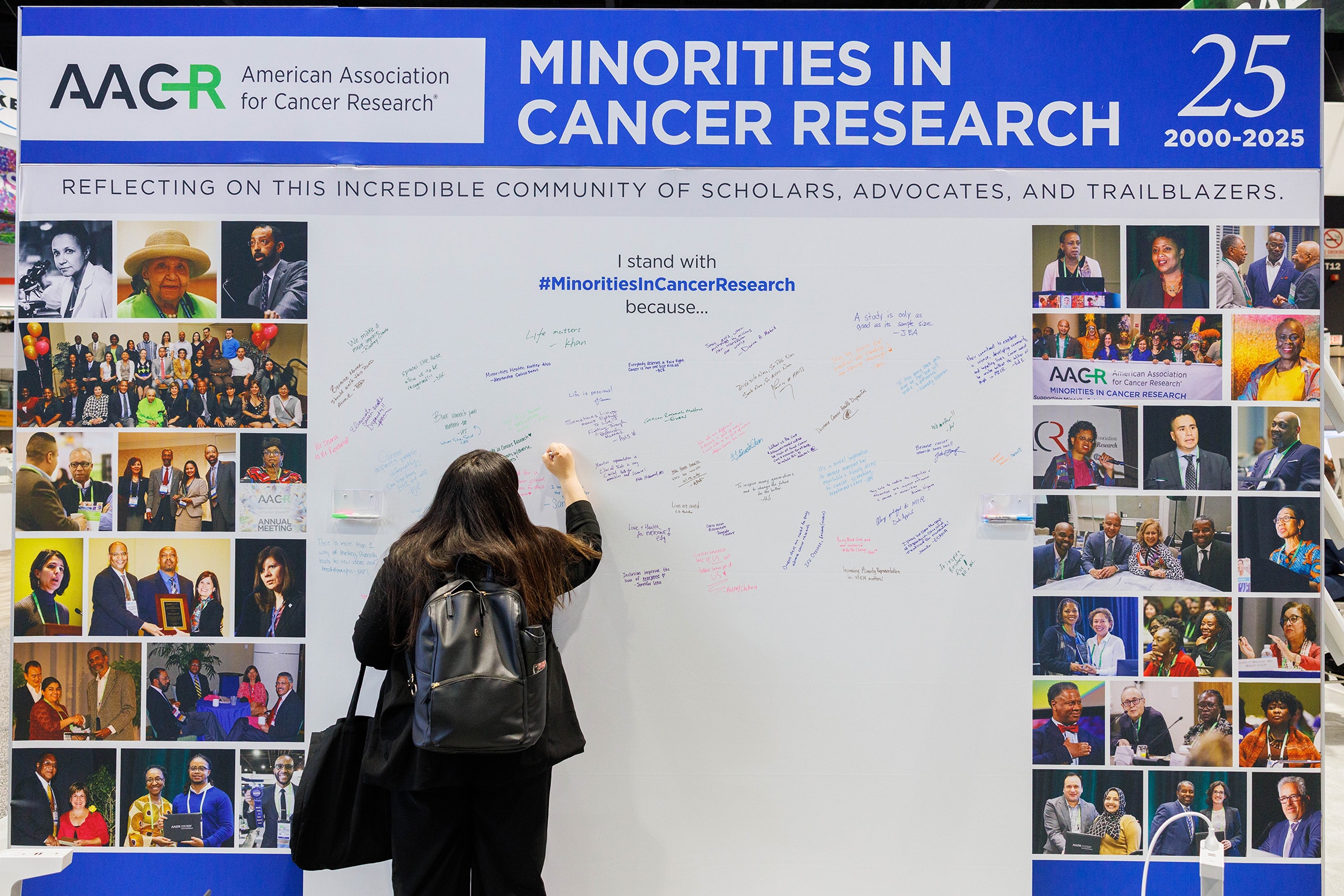
A member of AACR Minorities in Cancer Research signing the 25th anniversary mural.
Christopher R. Flowers, MD
  • AACR-MICR Jane Cooke Wright Lectureship. This lectureship highlights an outstanding scientist who has made meritorious contributions to the field of cancer research and who has, through leadership or by example, furthered the advancement of minority investigators in cancer research. The 2025 edition of the lectureship recognized Christopher R. Flowers, MD, head of the Division of Cancer Medicine and chair of the Department of Lymphoma and Myeloma at The University of Texas MD Anderson Cancer Center. Dr. Flowers—who was honored for his groundbreaking contributions to understanding disparities in lymphoma incidence, treatment, and outcomes, particularly in underrepresented and understudied patient populations—presented his lecture at the AACR Annual Meeting in April.
Christopher R. Flowers, MD
  • Education and Training. MICR encourages scientists to pursue careers in cancer research through its Scholar Award programs, which provide support for early-stage scientists and faculty members to attend AACR meetings. In 2025, a total of 55 AACR-MICR Early Career Scholar in Cancer Research awardees and AACR-MICR Faculty Scholar Awardees attended several AACR conferences, including the AACR Annual Meeting in Chicago.

WOMEN IN CANCER RESEARCH
(2025 COUNCIL CHAIR: MARIANA C. STERN, PHD)

Women in Cancer Research (WICR) is a membership group within AACR committed to recognizing women’s scientific achievements and fostering their career development and advancement in cancer research.
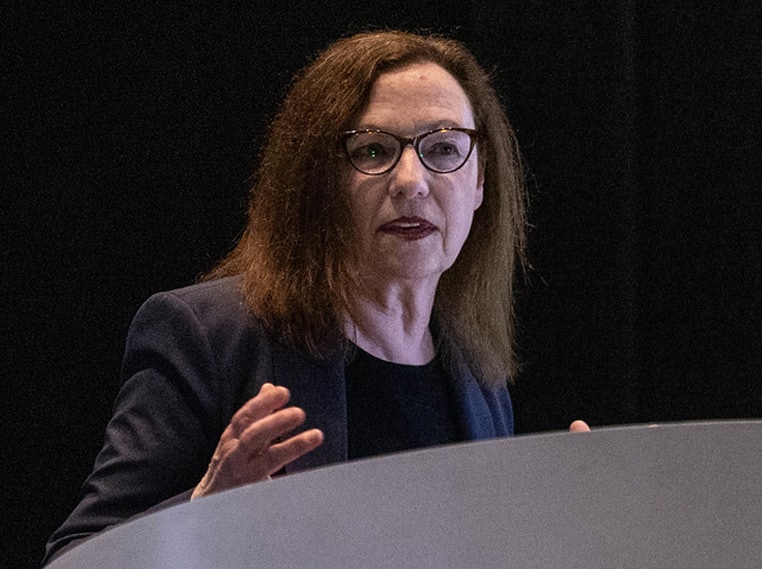
  • AACR-WICR Charlotte Friend Memorial Lectureship. This lectureship honors an outstanding investigator who has made meritorious contributions to the field of cancer research and who has, through leadership or example, furthered the advancement of women in science. The 2025 edition of the lectureship recognized Shelley L. Berger, PhD, FAACR, the founder and director of the Penn Epigenetics Institute and the codirector of the Tumor Biology Program at the Abramson Cancer Center of the University of Pennsylvania. Dr. Berger was recognized for her fundamental discoveries in cancer epigenetics—including how histone modifications and transcription factors regulate cancer, aging, and T-cell function—and for her transformative leadership in mentoring the next generation of scientists. She presented her award lecture at the AACR Annual Meeting in April.
  • Education and Training. WICR supports the inclusion of women scientists in the cancer workforce through the WICR Scholar Awards, which enable early-career, meritorious women scientists to participate in the AACR Annual Meeting. In 2025, a total of 25 women investigators were selected to attend the meeting in Chicago.
Elizabeth L. Travis, PhD
  • Education and Training. WICR supports the inclusion of women scientists in the cancer workforce through the WICR Scholar Awards, which enable early-career, meritorious women scientists to participate in the AACR Annual Meeting. In 2025, a total of 25 women investigators were selected to attend the meeting in Chicago.

ASSOCIATE MEMBER COUNCIL
(2025 COUNCIL CHAIR: HEATHER K. BEASLEY, PHD)

The Associate Member Council (AMC) serves as the leadership body for AACR Associate Members, who consist of graduate students, medical students and residents, and clinical and postdoctoral fellows. The Council develops programs that address the particular needs of early-career scientists.

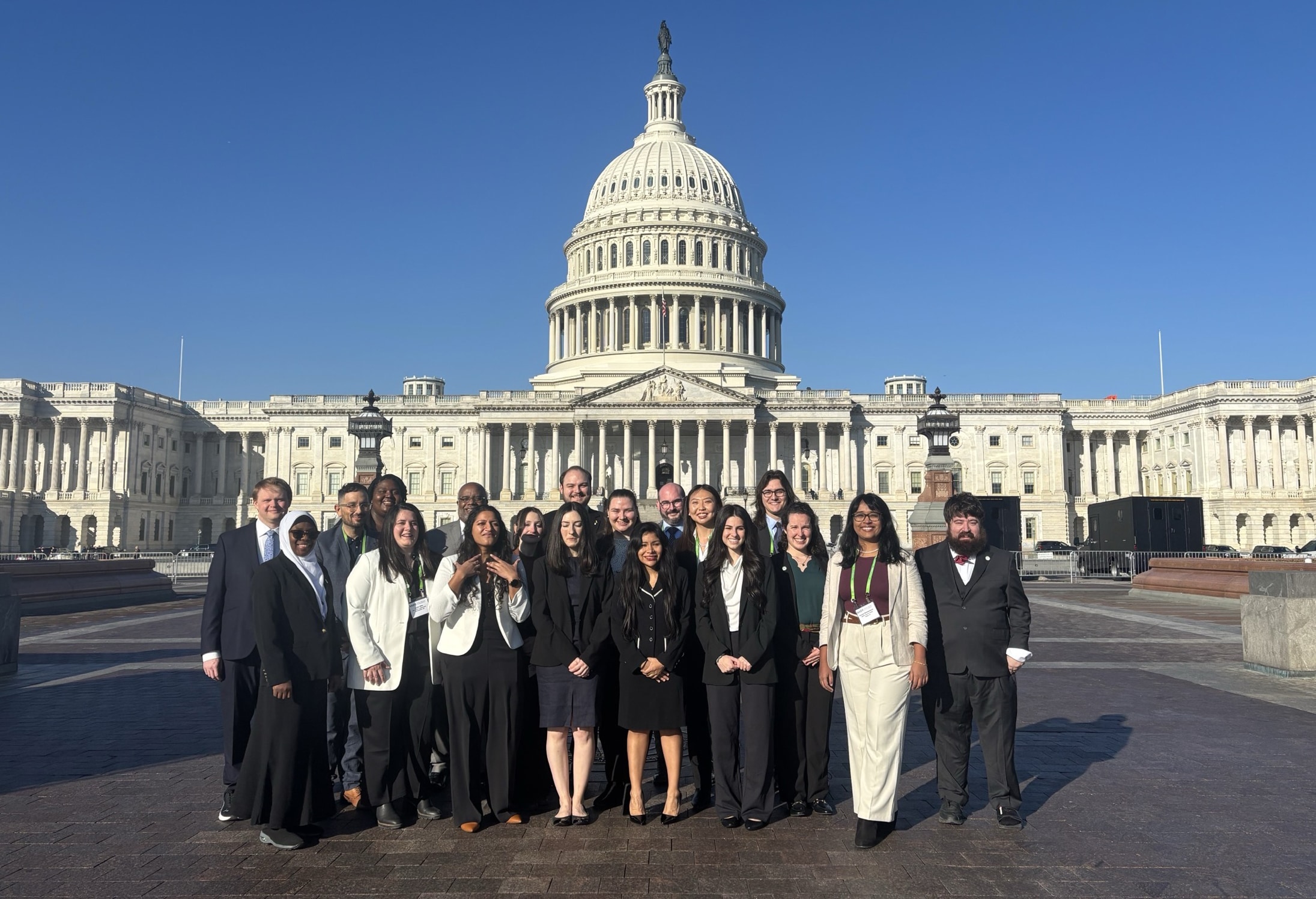
Participants in the AACR Early-Career Hill Day, February 2025
arrow to previous page Policy and Advoacy

Policy and Advocacy

Leadership

arrow to next page Leadership