Sections




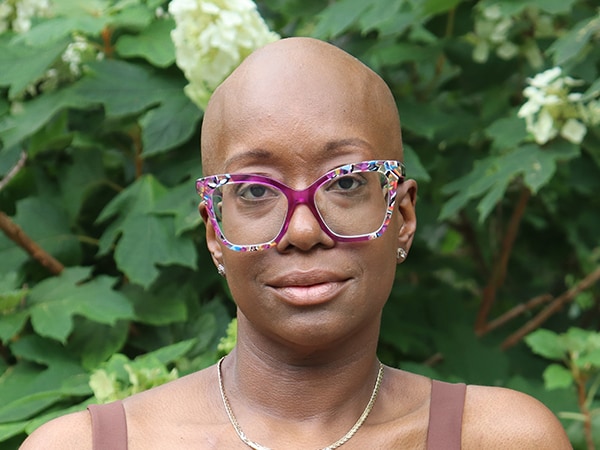
 Mary Catherine Riley was diagnosed with stage III ovarian cancer at age 46. Standard of care surgery and chemotherapy induced a full remission, but her cancer recurred three years later. She then participated in a clinical trial evaluating two targeted drugs, avutometinib and defactinib. She continues to take the medications—which were approved by the FDA in May 2025—and remains cancer free. Mary shared her story in the AACR Cancer Progress Report 2025.
We are witnessing a transformative era in the fight against cancer, driven by unprecedented advances across basic, translational, clinical, and population sciences. These breakthroughs—accelerated by rapid technological innovation—are reshaping how we prevent, detect, diagnose, and treat cancer, offering new hope to patients and families worldwide. Central to this progress is sustained federal investment in medical research, particularly through agencies such as the National Institutes of Health (NIH), National Cancer Institute (NCI), Food and Drug Administration (FDA), and Centers for Disease Control and Prevention (CDC).
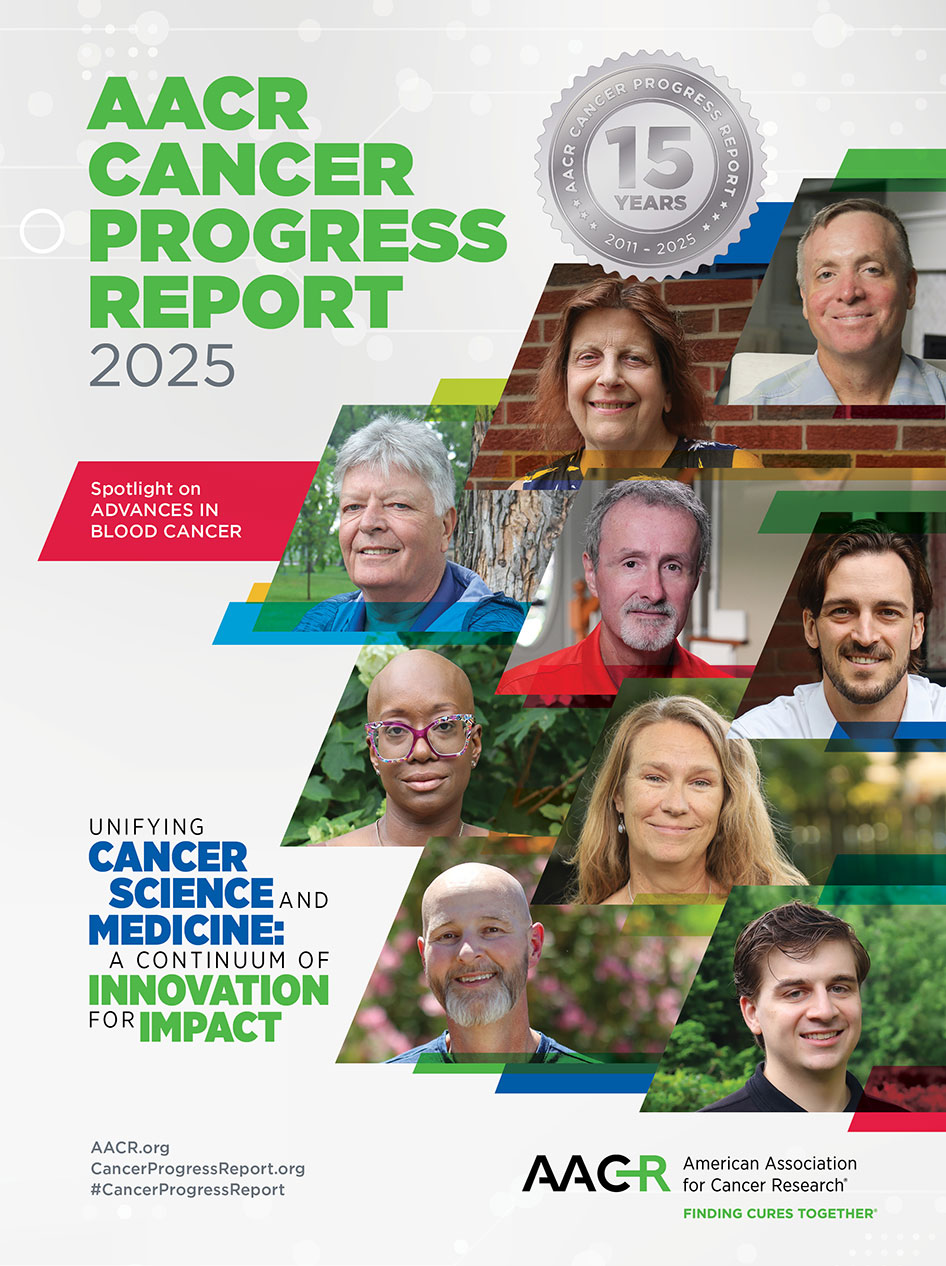
In 2025, the FDA approved 15 new anticancer therapeutics. These approvals include two new antibody-drug conjugates (one of the fastest-growing classes of molecularly targeted therapies in cancer medicine), datopotamab deruxtecan-dlnk for certain patients with HR-positive, HER2-negative breast cancer or non-small cell lung cancer (NSCLC), and telisotuzumab vedotin-tllv for NSCLC; a new combination therapy comprising avutometinib and defactinib for the treatment of certain patients with recurrent low-grade serous ovarian cancer; and dordaviprone, the first and only systemic treatment for certain patients with diffuse midline glioma (a particularly aggressive brain tumor in children). These therapeutics are benefiting patients such as Michelle Anderson-Benjamin and Mary Catherine Riley, whose stories are featured in the report.
Over the past ten years, research in hematologic malignancies has led to extraordinary breakthroughs that have transformed patient outcomes. The development and approval of novel targeted therapies, such as Bruton tyrosine kinase (BTK) inhibitors and BCL-2 inhibitors, have revolutionized the treatment of chronic lymphocytic leukemia and other blood cancers. Immunotherapies, including CAR T-cell therapies and bispecific antibodies, have provided durable responses in patients with aggressive lymphomas and multiple myeloma. In 2025, the FDA approved linvoseltamab-gcpt, a new bispecific T-cell engager for treating multiple myeloma. Many of these advances are described in a spotlight on blood cancers in the AACR Cancer Progress Report 2025.
Precision medicine is rapidly evolving, enabling tailored treatment strategies based on individual molecular profiles. Innovations such as minimally invasive screening tests, artificial intelligence-driven diagnostics, and spatial transcriptomics are enhancing early detection and treatment planning. These technologies are not only improving outcomes but also helping to address long-standing disparities in cancer care.
Despite these achievements, cancer remains a formidable public health challenge. More than two million new cases are projected in the U.S. in 2025 alone. The incidence of certain cancers is rising in individuals younger than 50. Disparities persist, with racial and ethnic minority groups and medically underserved populations bearing a disproportionate cancer burden. Structural inequities, environmental exposures, and systemic barriers continue to influence cancer risk and outcomes.
AACR remains steadfast in its mission to educate the public and policymakers, advocate for robust and predictable federal funding, and support the next generation of researchers. The AACR Cancer Progress Report 2025 serves as a powerful testament to the life-saving impact of research and a clarion call for continued investment in medical research and innovation to conquer cancer for all.
As AACR President (2025–2026) Lillian L. Siu, MD, FAACR, noted in the AACR Cancer Progress Report 2025, “the technologies and treatments emerging today have the potential not only to extend life but to preserve its quality, turning cancer into a manageable condition or preventing it altogether. Together—scientists, clinicians, patients, advocates, funders, and policymakers—we can ensure that the momentum continues and that every discovery brings us closer to our shared vision: a world where fewer people develop cancer, more people are cured, and all patients live longer, healthier lives.”
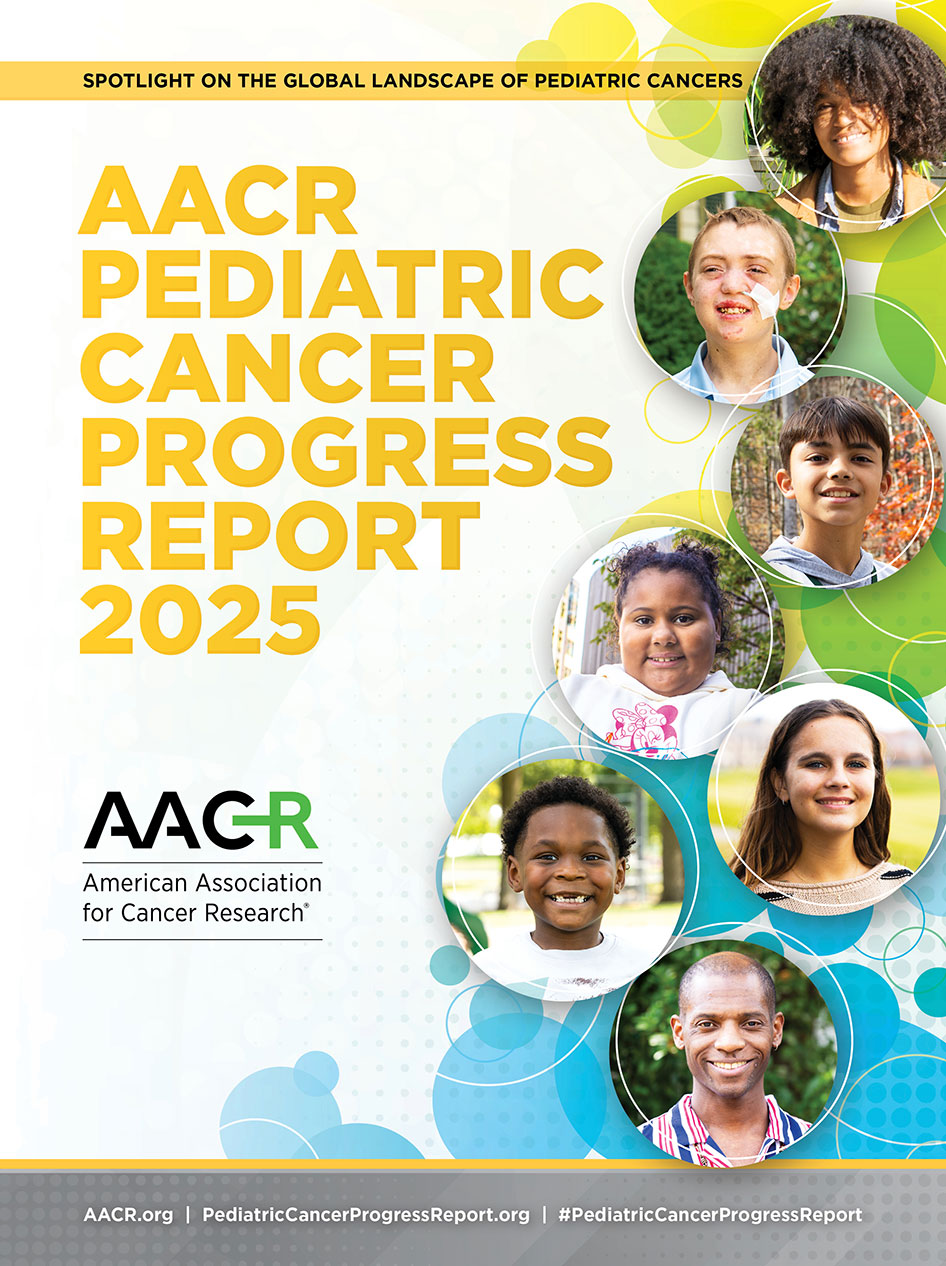
Cancer affecting the pediatric population (ages 0–19) remain a focal point in cancer research and a major focus for AACR. Leukemia and nervous system cancers are the most common pediatric cancers; thanks to decades of basic, clinical, and translational research, new therapies are being approved that are improving outcomes for both pediatric and young adult patients. In 2025, AACR launched the AACR Pediatric Cancer Progress Report to showcase major advances while highlighting the current gaps in pediatric cancer research. Recent advances against pediatric cancer outlined in the report include the following:
Despite these promising trends, the benefits of these advances are not evenly distributed across cancer types and population groups, and pediatric cancer continues to be a persistent public health challenge. To address this challenge, AACR urges all stakeholders—including the biopharmaceutical industry, academic and medical institutions, patient-centric organizations, and the federal government—to come together at this critical moment in the fight against pediatric cancer and provide hope to children, adolescents, and their families.